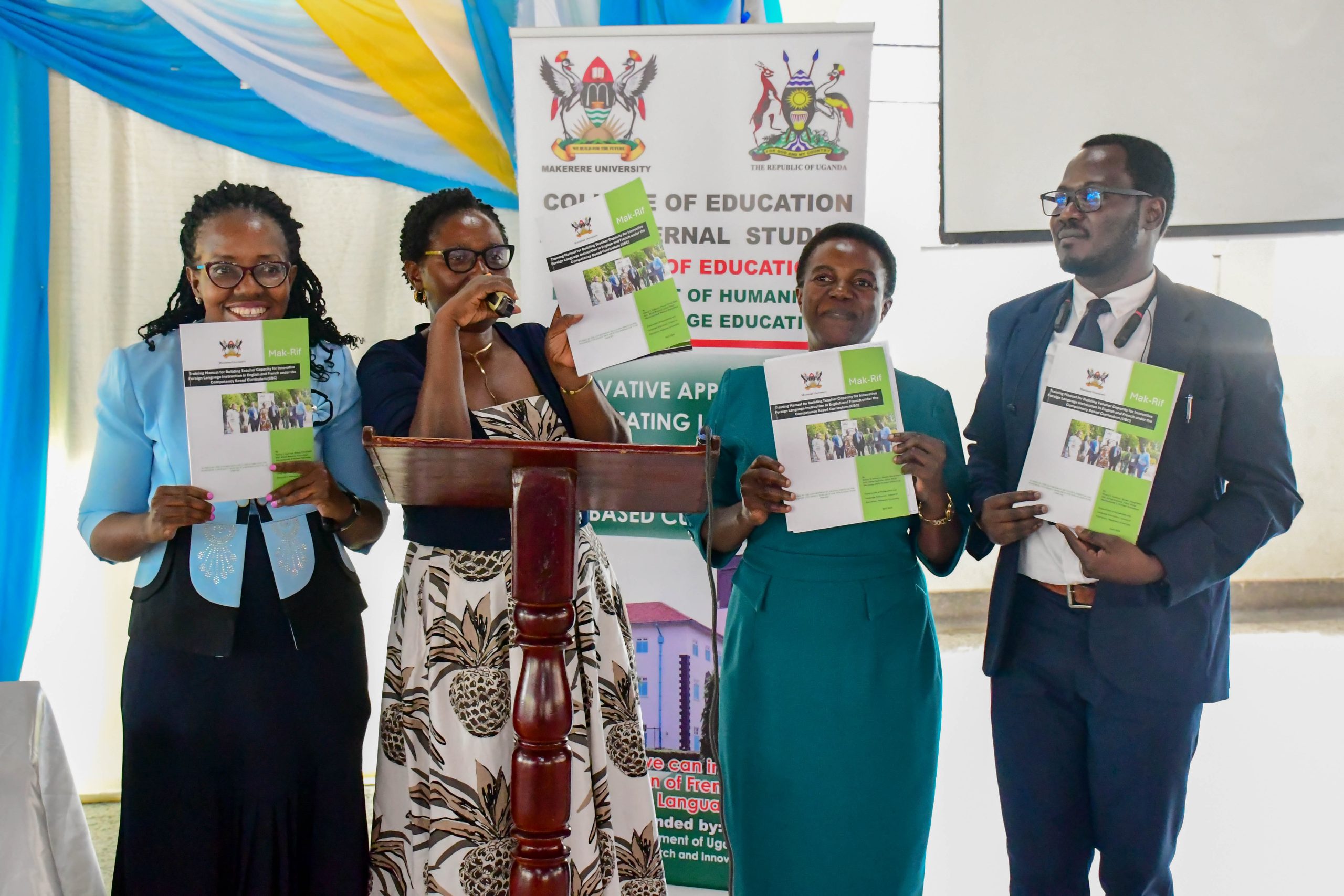
On 13th May 2026, the College of Education and External Studies at Makerere University unveiled the Training Manual for Building Teacher Capacity for Innovative Language Instruction in English and French under the Competency-Based Curriculum (CBC).
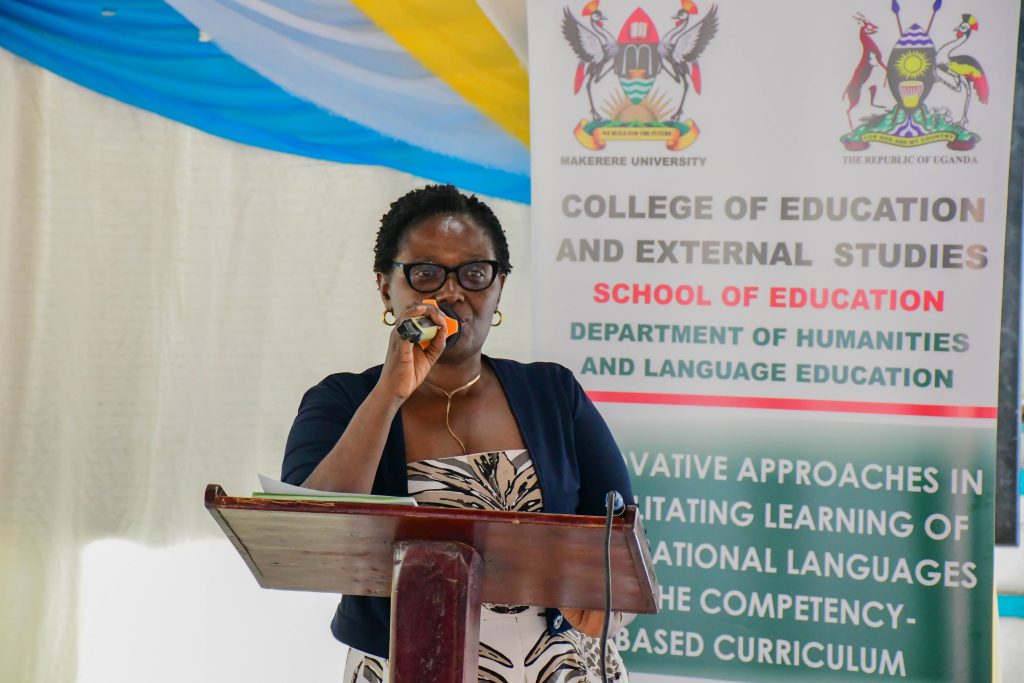
Launched by Ms. Night Alice from the Department of Education Standards at the Ministry of Education and Sports, the Training Manual marks the successful completion of a two-year research study funded by the Government of Uganda through the Makerere University Research and Innovation Fund (MakRIF).
The Principal of the College of Education and External Studies, Prof. Anthony Muwagga Mugagga highlighted that the Training Manual marks a significant milestone in advancing language education under the Competency-Based Curriculum (CBC).
Prof. Mugagga commended the following members of the research project team -Dr. Nancy R. Nabiryo, Dr. Moses Wang’koko Ebil, Dr. Alfred Buluma, Dr. Julius Shopi Mbulankende, and Dr. Michael Walimbwa, for developing the Training Manual.
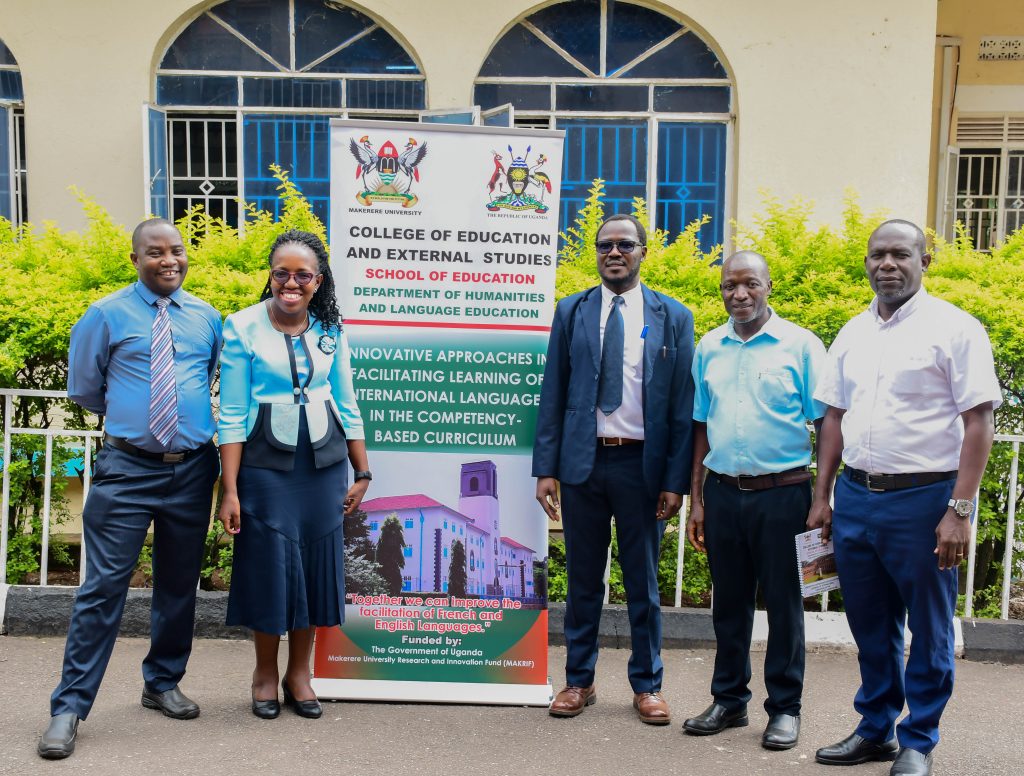
According to the Principal Investigator, Dr. Nancy R. Nabiryo from the Department of Humanities and Language Education at Makerere University, the study, targeted teachers in the Greater Mukono District area, covering Mukono, Kayunga, Buikwe, and Buvuma.
Dr. Nabiryo explained that the research study revealed that teachers were finding it hard to teach English and French under the new competency-based curriculum (CBC). Based on the findings, the project research team working with the teachers and key stakeholders in the education sector, underscored the need to come up with innovative approaches to facilitate the teaching of English and French under the Competency-based curriculum (CBC).
Dissemination of research findings
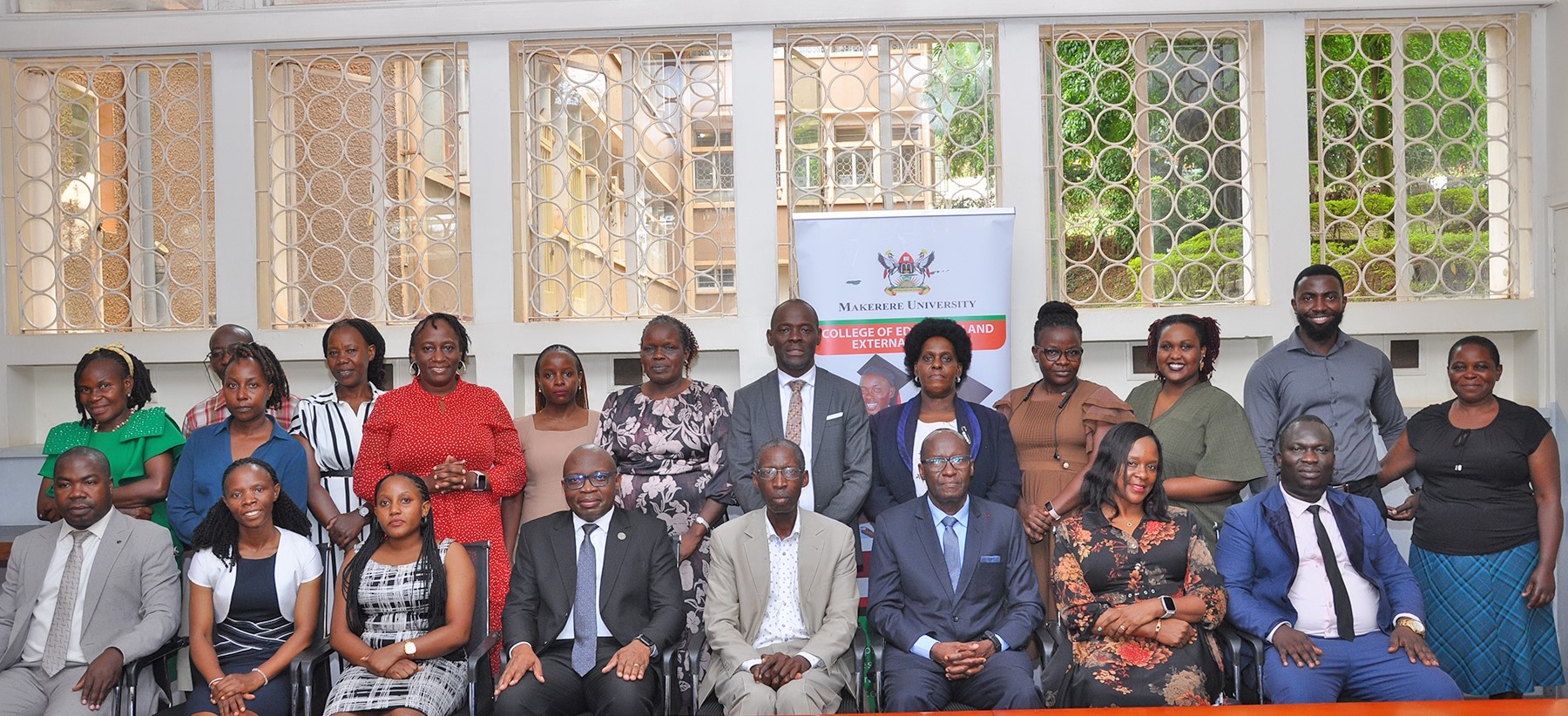
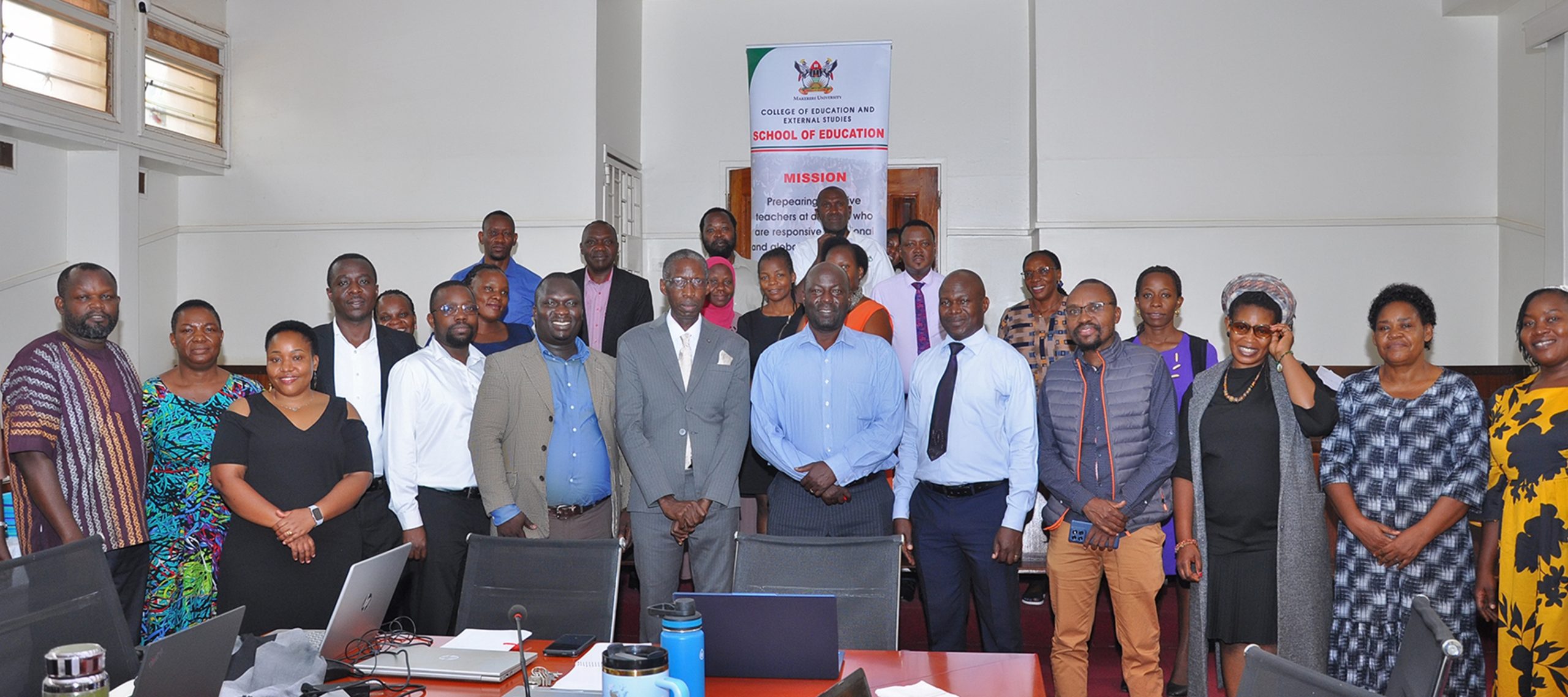
Held on 13th May 2026, the dissemination workshop held at Seeta High School-Mbalala Campus brought onboard, researchers, teachers, policy makers, the Uganda National Examinations Board (UNEB), the Department of Education Standards at the Ministry of Education and Sports, Makerere University Research and Innovation Fund, the media, as well as, academic staff who teach English and French at the University level.
At Makerere University, the dissemination workshop targeted staff from the College of Education and External Studies (CEES), and the College of Humanities and Social Sciences (CHUSS).
The proceedings of the dissemination workshop focused on building sustainable capacity for the innovative foreign language teaching under the Competency-Based Curriculum (CBC). The dissemination workshop, therefore, featured presentations on the background of the project, findings and achievements, discussion of the project findings, and the launch of the Training Manual.
Why English and French?
The Principal Investigator, Dr. Nabiryo highlighted that for Competency-Based Education to be implemented effectively, the teachers and learners, should be grounded in the language of delivery.
“English is Uganda’s official language of delivery. English is the main language used for teaching in secondary schools, and every student must learn it,” she said.
Dr. Nabiryo explained that French is also very important as an international language because it presents learners with more ways to communicate and better job opportunities outside Uganda.
The challenge of teaching English and French under the new curriculum
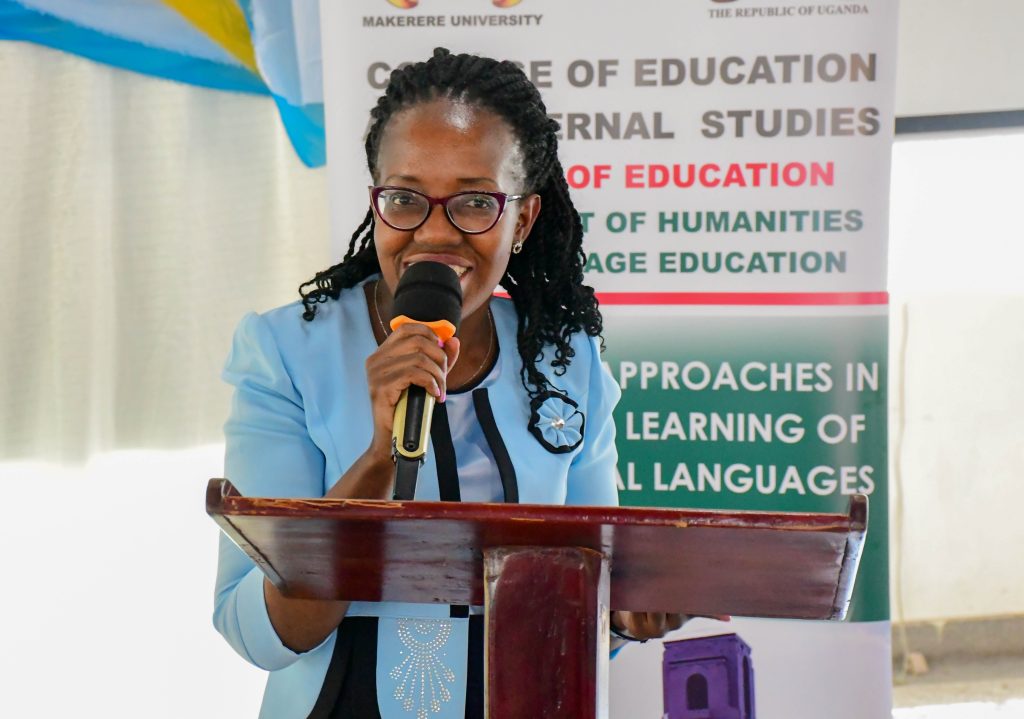
Dr. Nabiryo and her team, noted that in 2020, Uganda adopted the Competency-Based Curriculum (CBC) which stipulated a learner-centred approach and skills-oriented education. However, research involving academic staff from Makerere University College of Education and External Studies, and teachers from Greater Mukono, revealed that secondary school teachers of English and French were facing significant implementation challenges.
Key research findings
The study established the following:
- Teachers commonly use innovative approaches (Communicative Language Teaching, Task-Based Language Teaching, Information and Communication Technology), but often without deep pedagogical understanding.
- Classroom practice is heavily textbook and syllabus driven
- Resource constraints, especially ICT and large class sizes are the most persistent challenges
- Continuous assessment under CBC is poorly understood and inconsistently implemented
- Teachers overwhelmingly request for ongoing professional development, not one-off workshops
Dr. Nabiryo reiterated that the Training Manual was developed directly in response to the aforementioned findings. “The Training Manual translates empirical evidence into practical, scalable solutions for teachers, trainers, and policy makers,” she said.
Policy recommendations
The project research team presented the following recommendations:
- Institutionalization of school-based professional learning circles
- Supporting Training of Trainers (TOT) for cascade implementation
- Investing in low-cost, shared ICT solutions rather than hardware-heavy models
- Aligning inspection and supervision with competency-based evidence, not content coverage
- Using the Training Manual as standard reference for CBC language teacher development
Significance of the Training Manual
Commending the research project team for the engagement of secondary school teachers, Prof. Mugagga, stated that the College of Education and External Studies, is committed to supporting teacher educators as they embrace learner-centred instruction and outcome-oriented frameworks. “The Training Manual provides invaluable guidance, offering practical tools, and evidence-based strategies to facilitate effective durable classroom and school-level change, “ he said.
Prof. Mugagga encouraged education stakeholders to engage deeply with the modules and recommendations. “Together, we shall nurture a new generation of learners who are not only academically proficient, but also equipped with the linguistic skills essential for personal and national development.”
Competency-Based Education must start with teachers
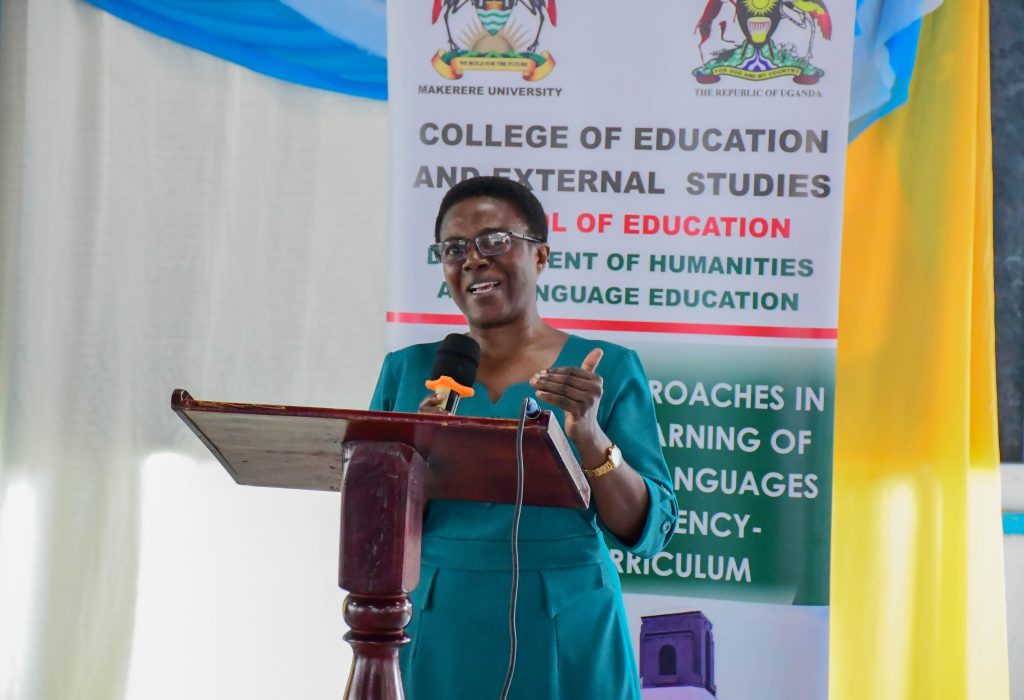
Dr. Rebecca Nambi, the Head, Department of Humanities and Language Education at Makerere University, emphasized the role of the teacher in the effective implementation of Competency-Based Education (CBE). “For CBC to be implemented effectively, it must start with the teachers, and then other stakeholders. Always remember, that the teacher designs learning materials. Therefore, how the teacher designs the learning materials, affects the delivery of Competency-Based Curriculum,” she guided.
Dr. Nambi applauded the research project team for coming up with this study that stipulates re-thinking innovative approaches of teaching English and French. “The research project work guides us on the learner centred model, and the competences in critical thinking, collaboration, multi-cultural settings and communication,” she said.
Acknowledging that developing observable competencies calls for innovative teaching, reflective practice, and willingness to adapt, Dr. Nambi appealed to teachers and participants to utilize the Training Manual, which provides robust frameworks to empower educators with the tools they need to foster dynamic, learner-centred classrooms.
Competency-Based Curriculum hinged on creativity
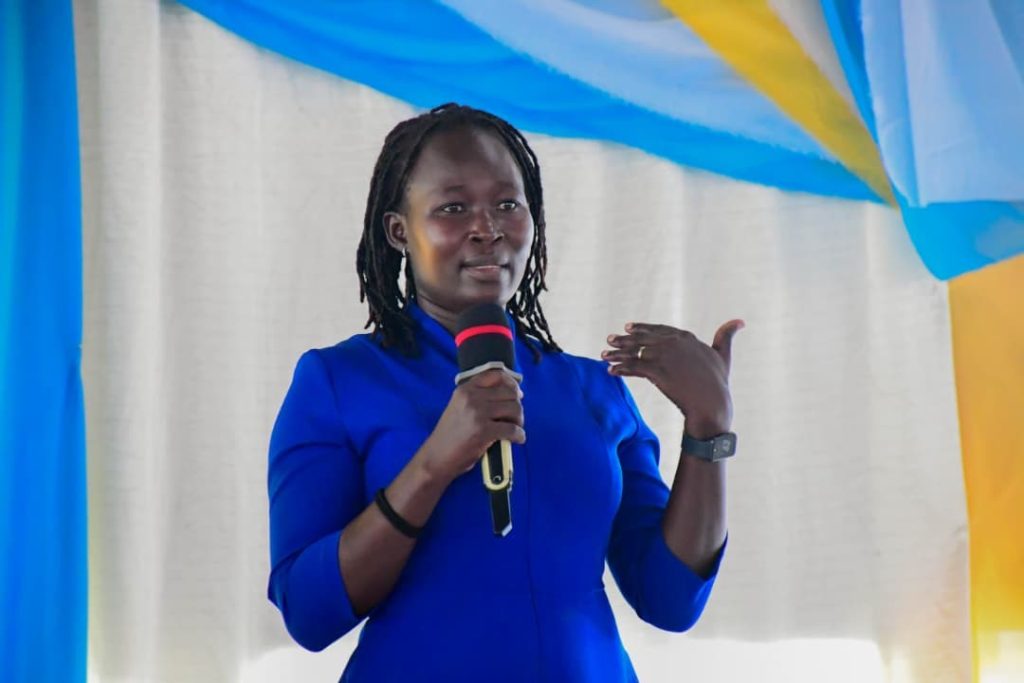
Ms Proscovia Amaniyo, Examinations Officer at UNEB, noted that the new Competency-Based Curriculum calls upon both the learners and teachers to be creative. “Teachers and education institutions, the new CBC reminds us to change our mode of delivery. I therefore commend the research project team from Makerere University, for presenting to us, the documented evidence of the challenges faced by teachers of English and French, providing the recommendations, and a Training Manual to be used as a standard reference for CBC language teacher development
Competency-Based Education requires mindset change and integration of ICT
Contributing to the discussion, Ms Night Alice from the Department of Education Standards, Ministry of Education and Sports, reiterated the need for continuous mindset education programmes for teachers, capacity building and re-tooling sessions, and the integration of ICT in the teaching and delivery approaches.
Using the Training Manual
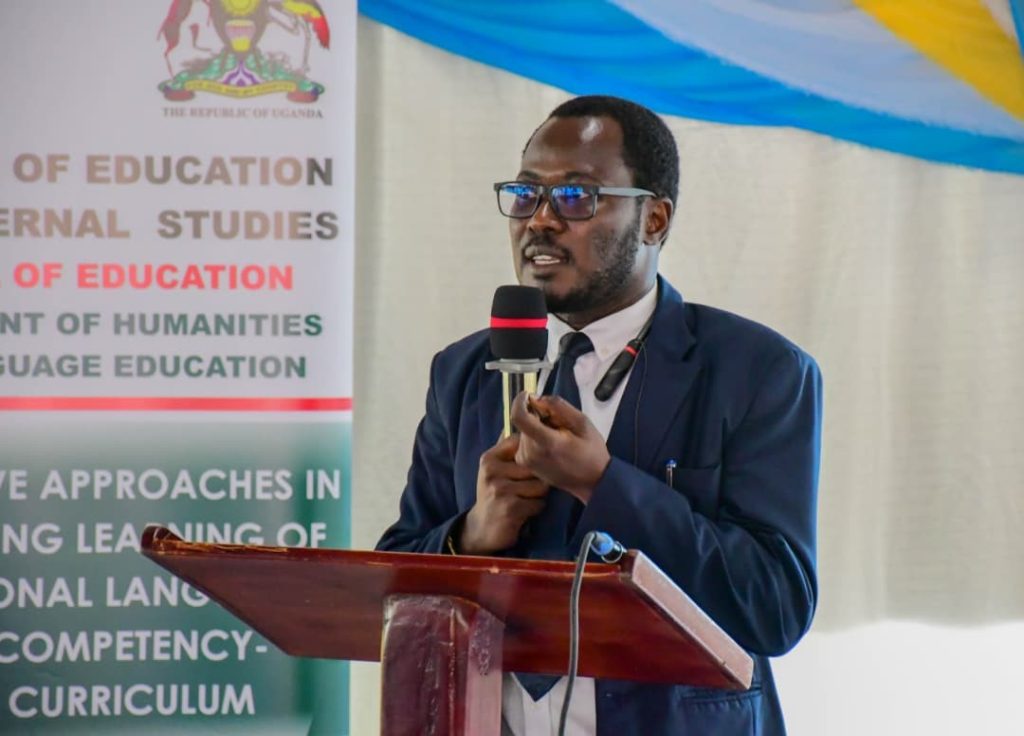
The Co-Principal Investigator, Dr. Moses Wang’koko Ebil, and member of faculty from the French Language Education Unit, Department of Humanities and Language Education, specified that the Training Manual was crafted as a practical and comprehensive guide for educators, inspectors, and policymakers committed to implementing the Competency-Based Education (CBC) in schools in Uganda.
“To make the most of its contents, users should approach the Training Manual as both a reference and a step-by-step toolkit, supporting the transition from traditional content-based teaching to innovative, competency-driven practice,” he stated.
Achieving the CBC Vision
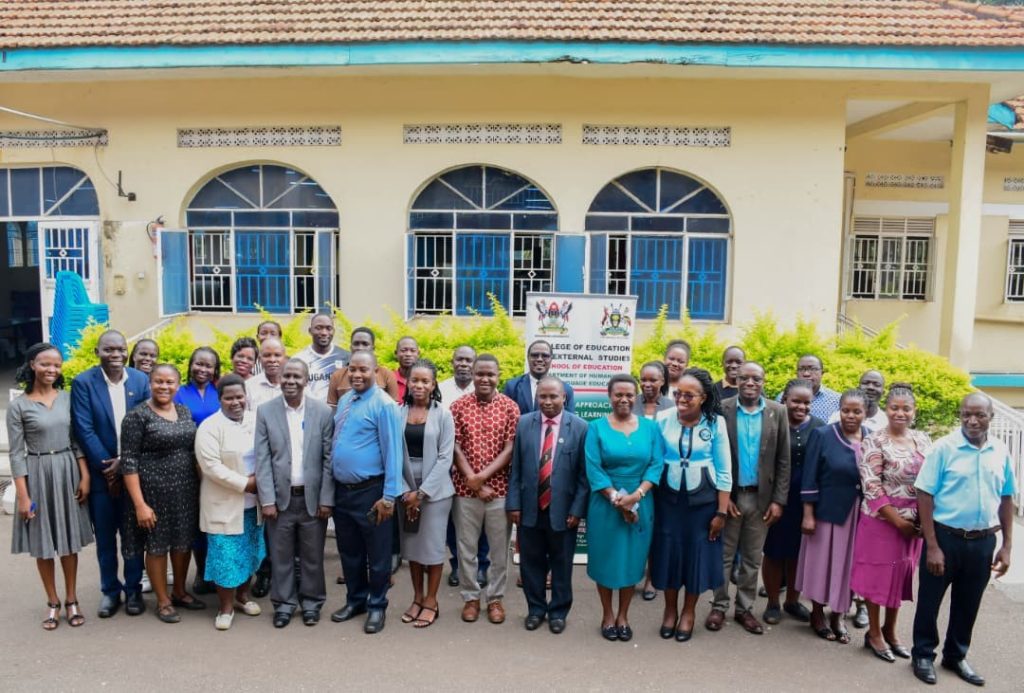
Dr.Wang’koko Ebil stated that effective utilization of the Training Manual will empower the teachers to nurture learners who are confident, articulate, and equipped to thrive in both national and international contexts. “The ultimate aim is to advance language education in Uganda, moving beyond traditional methods to embrace a dynamic, competency-driven approach that prepares learners for lifelong success.”
Conclusion
The Training Manual demonstrates how research-driven insights can be converted into durable classroom and school-level change. It offers policymakers a credible, context-responsive framework for strengthening Uganda’s capacity in international language education under the Competency-Based Curriculum (CBC).