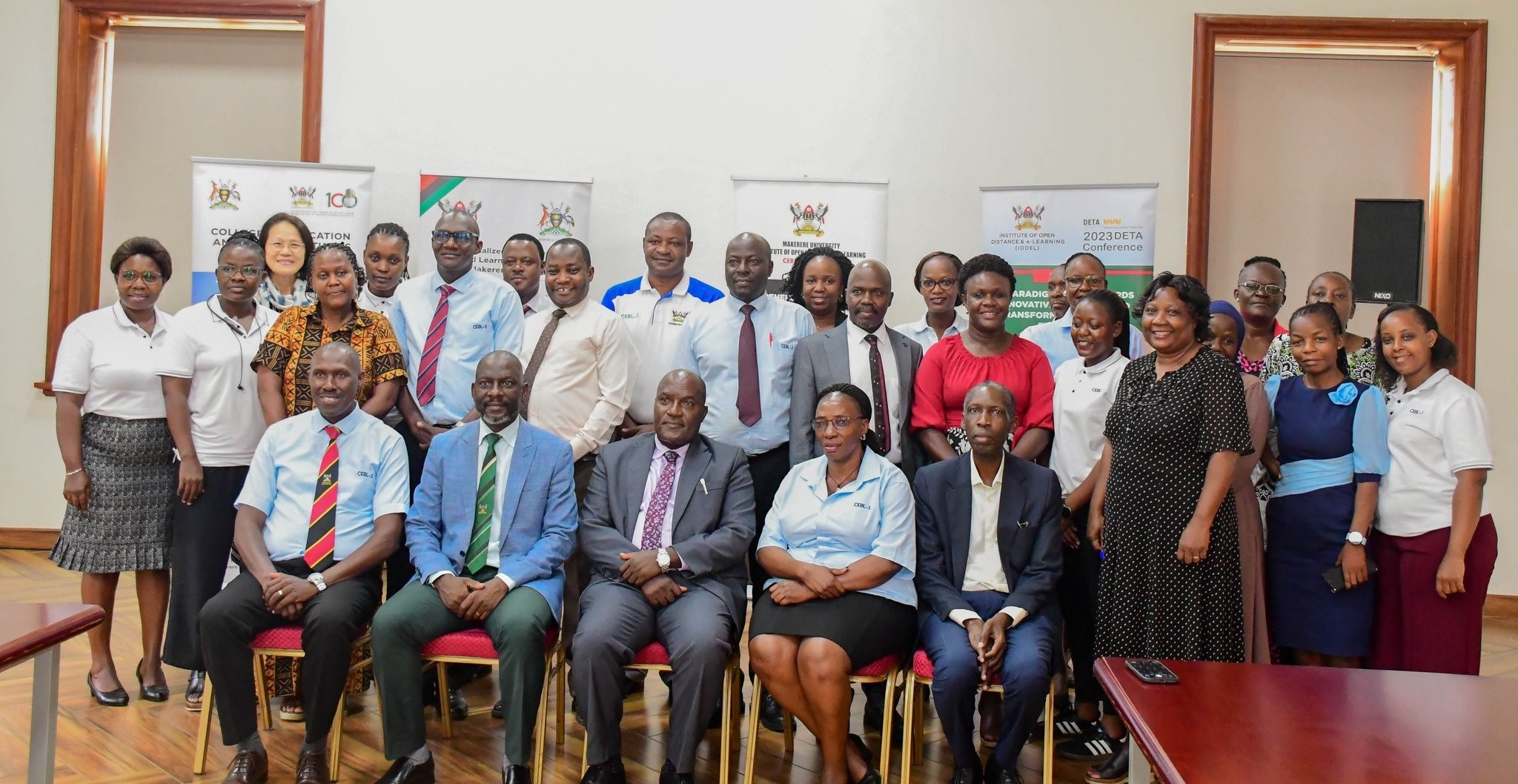
May 28, 2026: Researchers and education leaders at Makerere University have called for urgent investment in infrastructure, policy reform, digital inclusion, and institutional support to ensure blended learning succeeds in Uganda’s higher education sector.
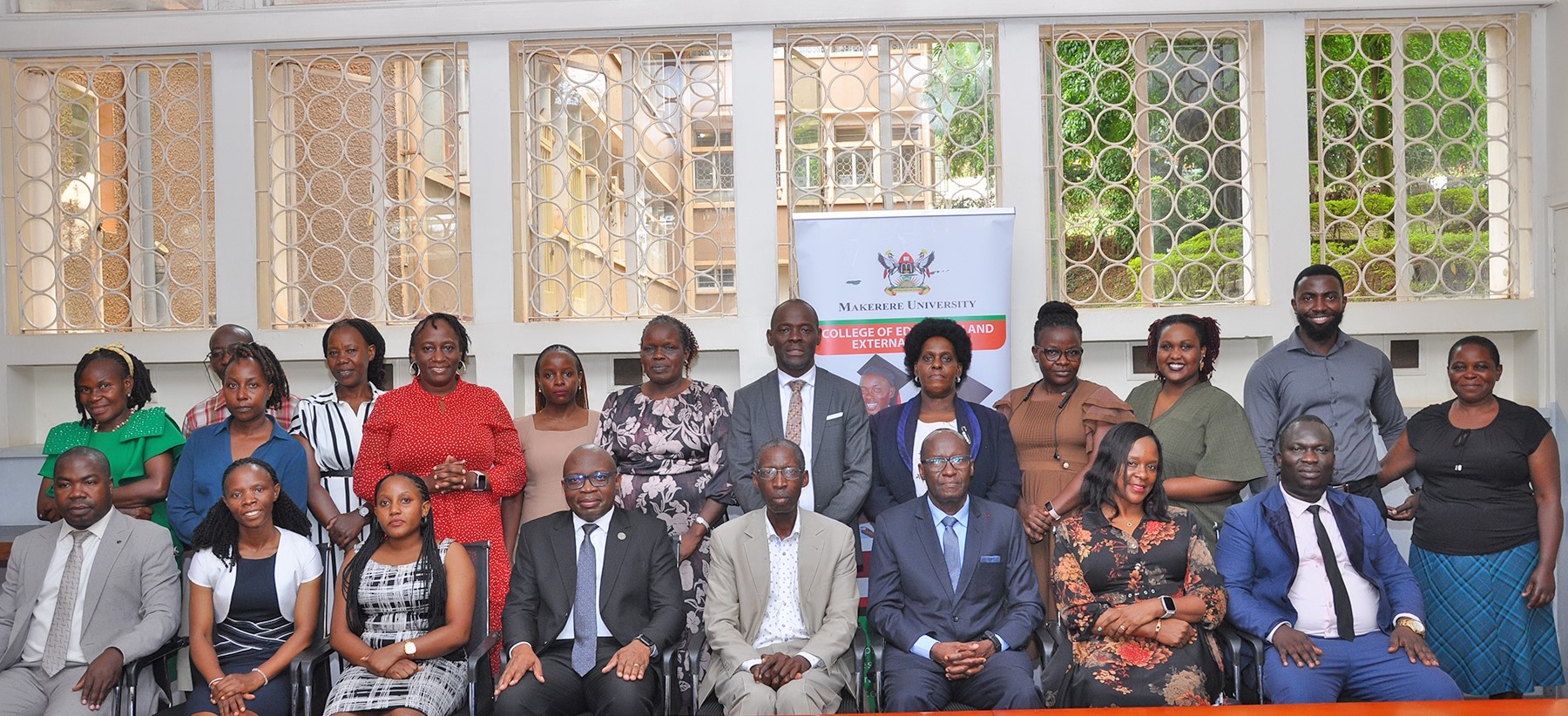
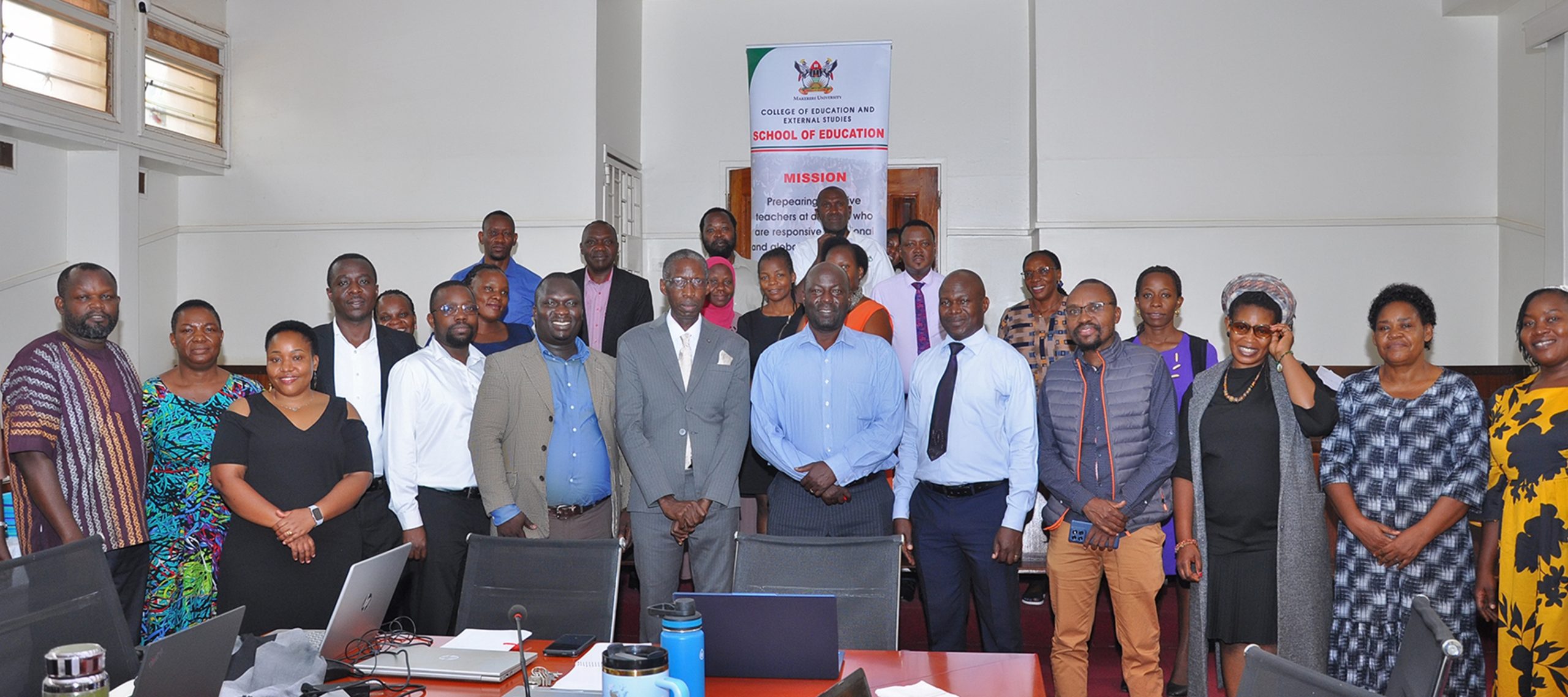
The calls emerged during the Dissemination Workshop for the Comprehensive Evaluation of Blended Learning (CEBL III) held at Makerere University on Thursday 28th May 2026. The workshop was organised by the Institute of Open, Distance and eLearning (IODeL) under the College of Education and External Studies (CEES).
The CEBL III project runs from 2021 to 2026 and forms part of broader efforts by Makerere University to institutionalise blended teaching and learning across all colleges and administrative systems.
The multi-year research project funded by the Government of Uganda through the Makerere University Research and Innovation Fund (MakRIF), examined the uptake of blended learning among undergraduate students, graduate students, and academic staff. The study involved a wide range of participants across disciplines, entities, and institutions.
The project team members include: Dr Arthur Mugisha (Principal Investigator), Dr Harriet Najjemba (Co-P.I.), Prof. Paul Birevu Muyinda, Prof. Jessica Norah Aguti, Joshua Bateeze and Rose Akanya.
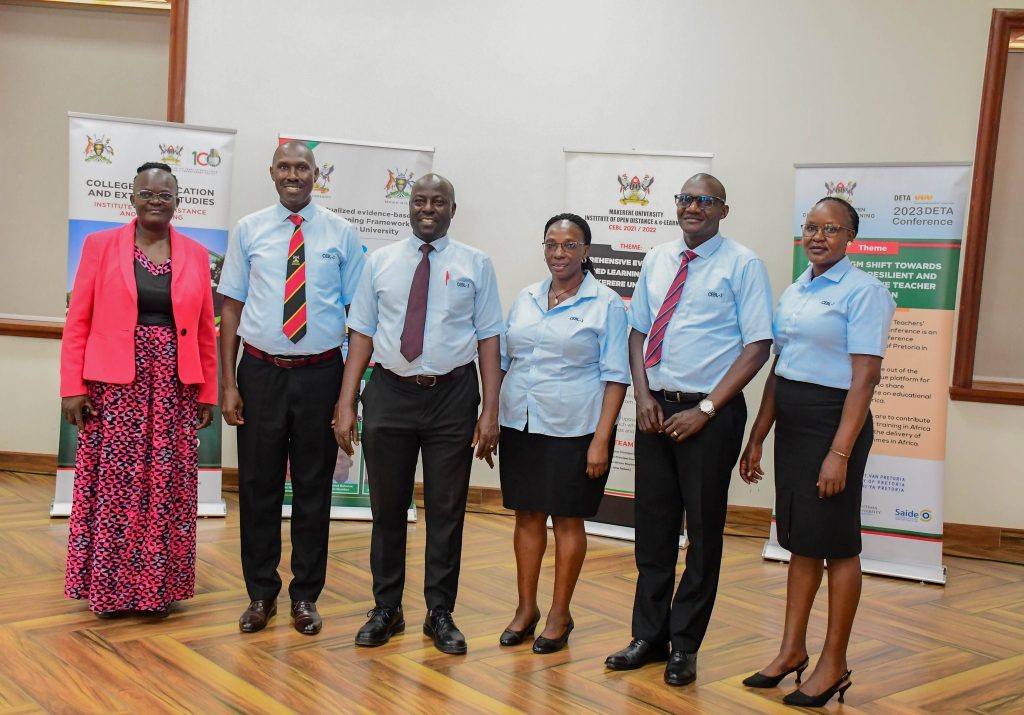
Policy Guidelines for the Implementation of Blended Learning
During the research period, the project team developed Policy Guidelines for Blended Learning Implementation at Makerere University.
The policy framework, which provides an evidence-based approach to institutionalize blended learning at Makerere University, and higher education institutions in general, is built around five interconnected pillars, including digital infrastructure, capacity development, institutional coordination, pedagogical support, and quality assurance.
“The Policy Guidelines are derived from the findings of the Comprehensive Evaluation of Blended Learning Uptake at Makerere University (CEBL) and are intended to support the effective, inclusive, sustainable, and quality implementation of Blended Learning across the University,” explained the Principal Investigator, Dr. Arthur Mugisha and a member of faculty at the College of Education and External Studies (CEES).
Dr Mugisha highlighted that the policy guidelines align with the Makerere University Open, Distance and eLearning Policy (2015), the Strategic Plan (2025-2030), Uganda Vision (2040), Sustainable Development Goal 4, and the Agenda 2063.
Key Findings
The findings position Blended Learning as a strategic opportunity for enhancing quality, access, and innovation within Uganda’s higher education sector, provided that its implementation is supported by coherent national policies and robust institutional support systems.
“The CEBL project findings indicate a strong support for Blended Learning among both learners and faculty at Makerere University. The participants acknowledged the potential of Blended Learning to enhance learner engagement, increase flexibility, improve access to learning resources, and strengthen the achievement of learning outcomes,” Dr Mugisha articulated.
CEBL project anchored within the Makerere University Strategic Plan
The research project team noted that the Makerere University Strategic Plan (2025-2030) emphasizes innovative teaching and learning approaches, with the University Management committing to technology-enhanced learning through investment in staff capacity building, infrastructure development, research funding, and international collaborators.
Challenges that may hinder the effective implementation of Blended Learning
According to the project team, the findings revealed several challenges that may hinder the effective implementation of Blended Learning. These include: unreliable Internet connectivity, frequent power outages, inadequate digital infrastructure, limited technical support, and insufficient institutional coordination.
In addition, during the consultative meetings with the academic staff at Makerere University, the project research team, noted the absence of a certified foundational Blended Learning pedagogy course for the teaching staff as a major barrier to Blended Learning Implementation.
“The absence of a certified foundational Blended Learning pedagogy course for lecturers across all academic ranks was identified by Makerere University Academic Staff Association (MUASA) as a major barrier to Blended Learning implementation,” said the Project research team.
Recommendations
Consequently, the CEBL III project team presented the following recommendations:
- The introduction of fully funded modular certification programmes covering core pedagogy, blended learning, and artificial intelligence (AI) tools.
- Proposed the integration of the aforementioned modules into broader stratified pedagogy programmes, as well as, into recruitment, enrolment, and orientation processes for new students and staff.
- The Uganda National Council for Higher Education (NCHE) needs to establish national standards for Blended Learning infrastructure, integrate blended delivery into accreditation and quality assurance frameworks, strengthen institutional capacity building for both students and staff, clarify workload and incentive structures, and promote secure, student-centered, technology-enhanced curricula.
Students advocate for a One-Stop Support Centre
Dr Mugisha revealed that one of the strongest recommendations from students was the creation of a One-Stop Student Support Centre offering technical, academic, financial, and social support services.
“Students argued that blended learning should not focus only on classroom teaching,” he said. “Universities must also address the broader experiences of learners, including registration, accommodation, coursework submission, and access to information.”
Dissemination Workshop Highlights
The workshop held on 28th May 2026 at Makerere University highlighted a growing consensus that blended learning is no longer optional for universities, and called upon the Government of Uganda through the respective Ministries to prioritize funding to the e-learning environment such as provision of adequate ICT infrastructure, access to electricity and affordable Internet throughout the country, and institutional support programmes such as regular capacity building to align with the trends such as Artificial Intelligence, Big Data, and Digitalization.
The workshop featured the dissemination of the CEBL III findings, a plenary session involving the participants, as well as, speeches from Prof. Paul Birevu Muyinda-the Director of IODeL, Prof. Anthony Muwagga Mugagga-Principal, College of Education and External Studies, Prof. Fred Masagazi Masaazi-Chairperson of the Grants Management Committee-Makerere University Research and Innovation Fund, and the Deputy Vice Chancellor (Academic Affairs), Prof. Sarah Ssali who was represented by Prof. Julius Kikooma, the Director of Graduate Training.
Blended Learning is a core requirement for modern universities globally
Representing Prof. Sarah Ssali, the Deputy Vice Chancellor for Academic Affairs at Makerere University, the Director of Graduate Training, Prof. Julius Kikooma said blended learning had become a “core requirement” for modern universities globally.
“Blended learning is no longer an optional supplement to traditional teaching,” Prof. Kikooma said. “It is increasingly becoming a core requirement for a modern, resilient, inclusive, and globally competitive university.”
He ratified the study for showing that Makerere University staff increasingly understand blended learning as “the intentional integration of face-to-face and digital pedagogies to improve student learning experiences.”
Prof. Kikooma called for sustained investment in internet connectivity, digital infrastructure, staff training, quality assurance, and policy harmonisation to support blended learning implementation.
Blended Learning should include Students with Special Needs and physical disabilities
Commending the CEBL III research project team led by Dr. Athur Mugisha, the College Principal, Prof. Anthony Muwagga Mugagga tasked the leadership and staff at Makerere University, as well as the participants attending the dissemination workshop, to come up with strategies aimed at ensuring that students or learners with special needs (for instance those with visual or hearing impairments) or those with physical disabilities can effectively benefit from blended learning.
Taking into consideration the Ugandan context, Prof. Mugagga argued that if infrastructure gaps are not addressed, blended learning could deepen educational inequalities. He called upon the project team, staff and the participants, to think about the plight of the majority of Ugandans who are not in position to buy computers and laptops. “How can the government, stakeholders and the University, help such students or learners who cannot buy laptops or computers to benefit from blended learning?” he asked.
Prof. Mugagga also raised concerns about Uganda’s unreliable electricity access, especially in rural communities. “We are discussing ICT integration in a country where electricity coverage remains limited,” he noted. “The child studying in a rural village today could become tomorrow’s doctor.”
Understanding the concept of blended learning
The Director of IODeL, Prof. Paul Birevu Muyinda said many people still misunderstand blended learning by equating it solely to teaching using Zoom.
“Many people equate blended learning with online learning or teaching. Others simply associate online learning with Zoom meetings and virtual classes,” Prof. Muyinda said.
Prof. Muyinda explained that the Comprehensive Evaluation of Blended Learning Uptake at Makerere University (CEBL) project had therefore helped to demystify blended learning by providing evidence that universities were already practising it through digital research, online publishing, sharing materials electronically, and combining technology with physical teaching.
“That is blended learning,” he said. “Makerere University is already heavily engaged in blended learning, and that is why these operational studies are very important.”
Prof. Muyinda noted that the research findings and policy guidelines emerging from the CEBL project would shape not only Makerere University, but also other universities across Uganda.
“The policies and guidelines emerging from these studies are going to be extremely useful, not only for Makerere University but for the country at large,” he said.
Blended Learning tailored to Uganda’s realities versus foreign Models
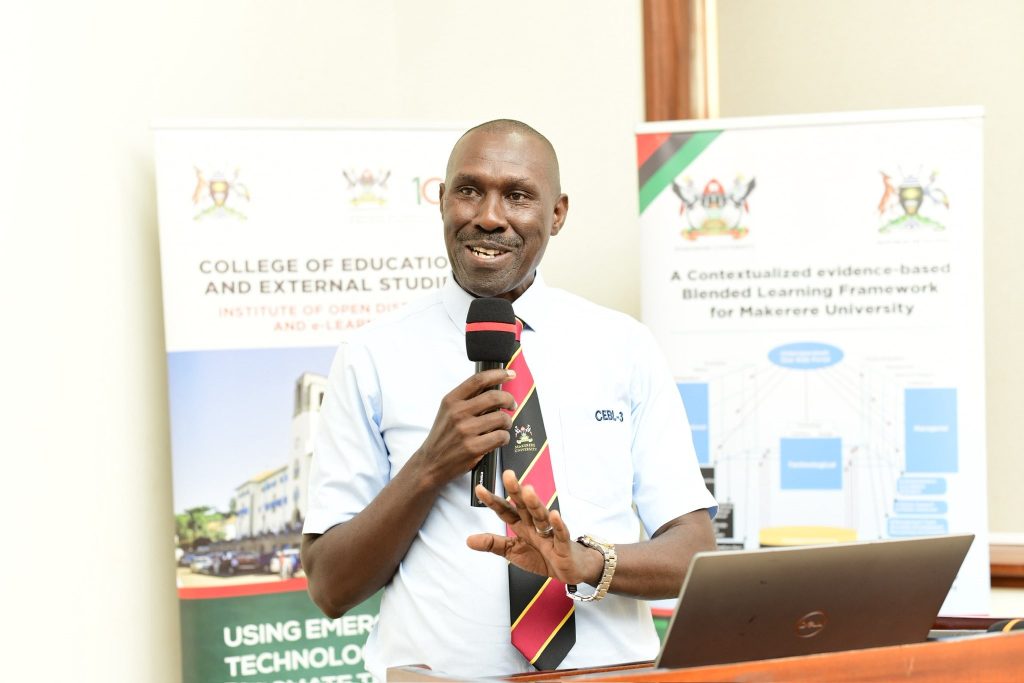
The Principal Investigator, Dr Arthur Mugisha said the project had culminated in what researchers are calling a “Contextualised Evidence-Based Blended Learning Framework” tailored to Uganda’s realities rather than copied entirely from foreign models.
“Our concern was how to contextualise such a framework so that it speaks to Makerere University, Uganda, East Africa, and Africa more broadly,” Dr. Mugisha said.
Dr Mugisha stated that the framework is built around five interconnected pillars, including digital infrastructure, capacity development, institutional coordination, pedagogical support, and quality assurance.
Research outputs, Visible institutional Impact and Value for Money
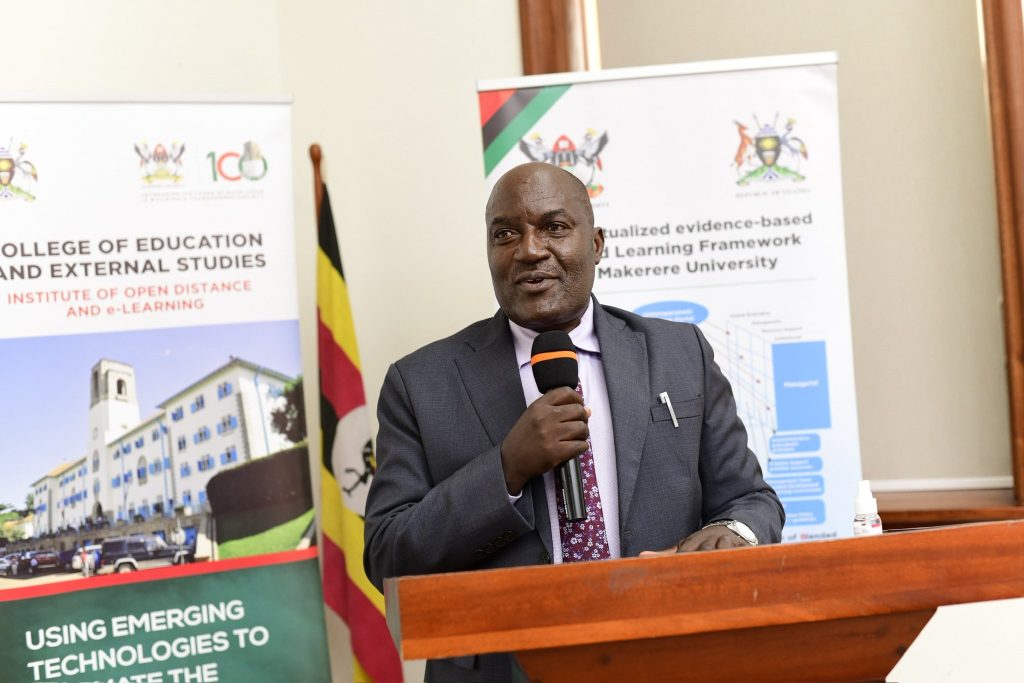
The Chairperson of the MakRIF Grants Management Committee, Prof. Fred Masagazi Masaazi, said Makerere University must ensure that research outputs translate into visible institutional impact.
“Government provides funding for research so that we come up with impact oriented outputs. “When I see outputs such as the policy documents and research findings presented here today, I contened that there is value for money,” he added.
Prof. Masagazi Masaazi urged the University leadership to establish stronger policy incentives for researchers instead of limiting recognition to promotions and retirement contracts.
“There should be organised, policy-driven incentives that motivate staff members to conduct research,” he said.
Call to Action
Dr Mugisha reiterated the need to introduce the Basic Certified Blended Learning Module for both students and lecturers. “This recommendation arises from the realisation that universities often assume everyone is digitally competent, which is not always true,”he stressed.
The dissemination workshop concluded with calls extended to the Makerere University Management, Senate, Council, Government, and development partners to support the implementation of the blended learning framework as Makerere University positions itself for a digitally driven future.