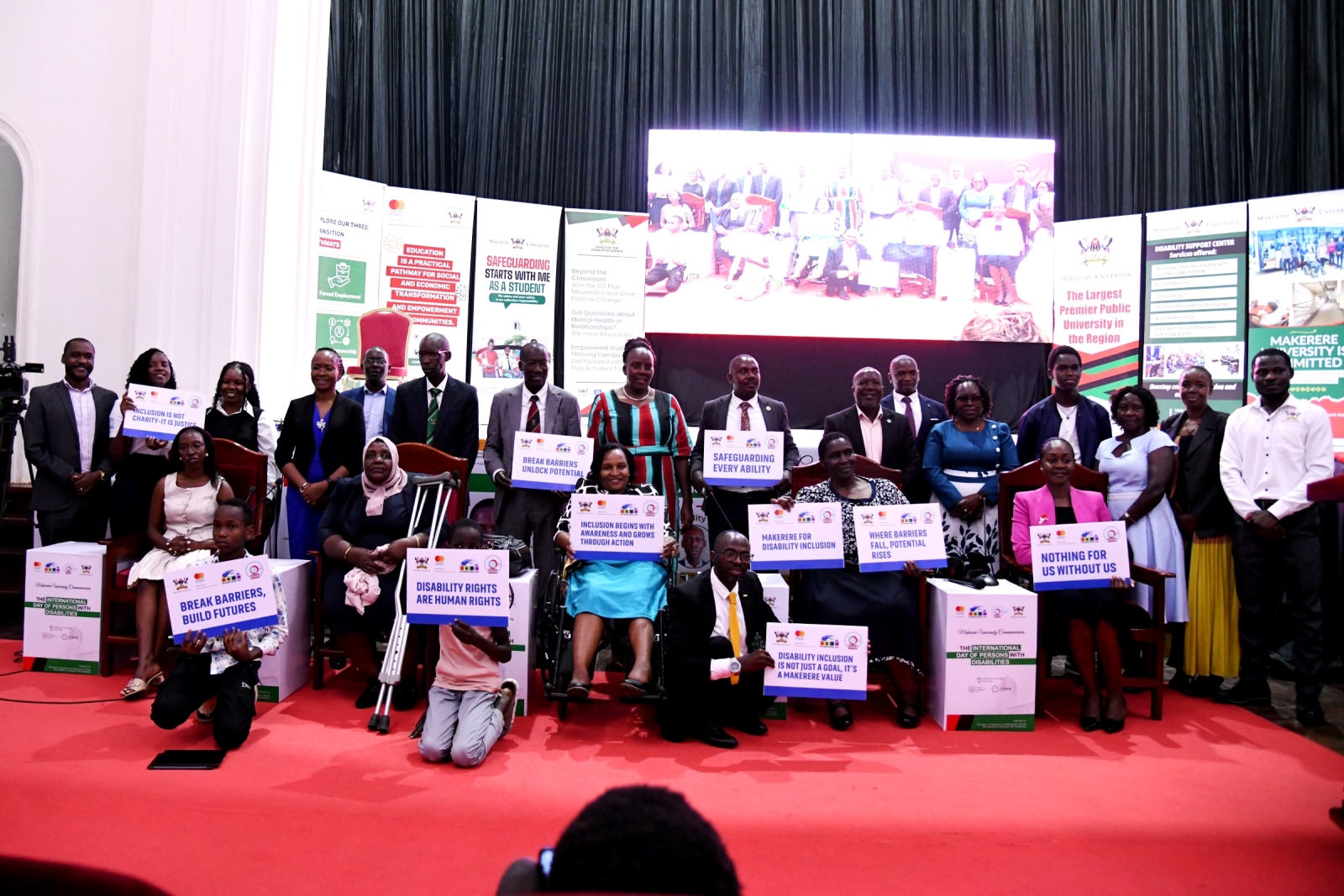
In the first week of December 2025, Makerere University in solidarity, with the rest of the world, celebrated the International Day of Persons with Disabilities.
The colourful event held in the University Main Hall on 1st December 2025 brought onboard Ministers and government officials, Makerere University Council and Management, National Union for Persons with Disabilities (NUDIPU), representatives of persons with disabilities at different levels, members of parliament, disability rights advocates, private sector partners, civil society actors, university staff, student leaders, and the wider community of persons with disabilities.

L–R: KCCA Lord Councillor Peace Sserunkuma; Deputy Vice Chancellor (Academic Affairs), Prof. Sarah Ssali; and Hon. Safia Nalule Juuko, Chairperson of the Equal Opportunities Commission.
The celebrations graced by the Minister of State for Disability Affairs, Hon. Hellen Grace Asamo and the Deputy Vice Chancellor (Academic Affairs)-Prof. Sarah Ssali was attended by key stakeholders including Hon. Safia Nalule Juuko-Chairperson of the Equal Opportunities Commission, Prof. Frank Mwiine-Acting Deputy Vice Chancellor (Finance and Administration), the Dean of Students-Dr. Winfred Kabumbuli, Guild President-Hon. Ssentamu Churchill James, Guild Minister for Persons with Disabilities-Hon. Donita Akakunda, and among other personalities.
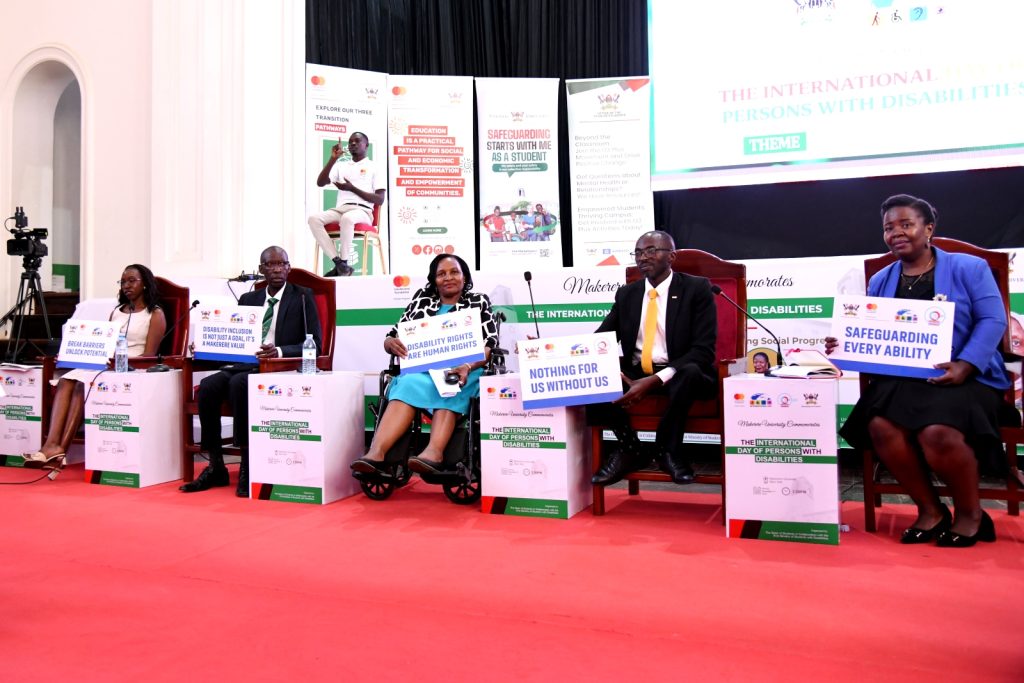
The commemoration featured a panel discussion moderated by Dr. Diana Ateenyi Ahumuza, offering a blend of academic, experiential, and advocacy-based perspectives on disability inclusion. The panel consisted of Dr. Naboth Rwakazwaire, founder of Hope for People with Disabilities; Prof. Anthony Muwagga Mugagga, Principal of the College of Education and External Studies (CEES); Lord Councillor Peace Sserunkuma; and Ms. Catherine Nakibuuka, a second-year law student. Their conversation explored practical solutions, policy gaps, personal experiences, and the role of institutions such as Makerere University in shaping a more inclusive society.
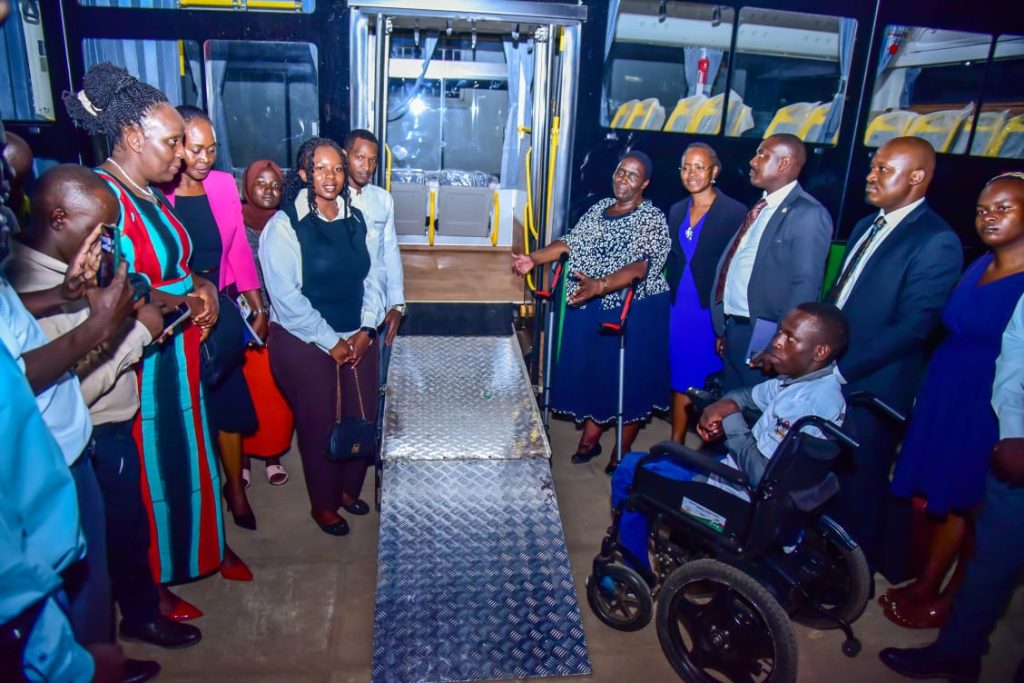
Reflecting on the times and in line with the theme, Fostering Disability-Inclusive Societies for Advancing Social Progress, the different speakers, persons with disabilities, and participants in general, lauded Makerere University for positive steps being undertaken with respect to inclusion of persons with disabilities. The participants commended the University for inclusive teaching, library services that are sensitive and inclusive, acquisition of a university bus for students with disabilities, sports activities for persons with disabilities, and establishment of the Makerere University Disability Support Unit. The institution has been called upon to remodel the old buildings so that people with disabilities are able to access the required spaces.
Highlighting strides in Disability Inclusion at Makerere
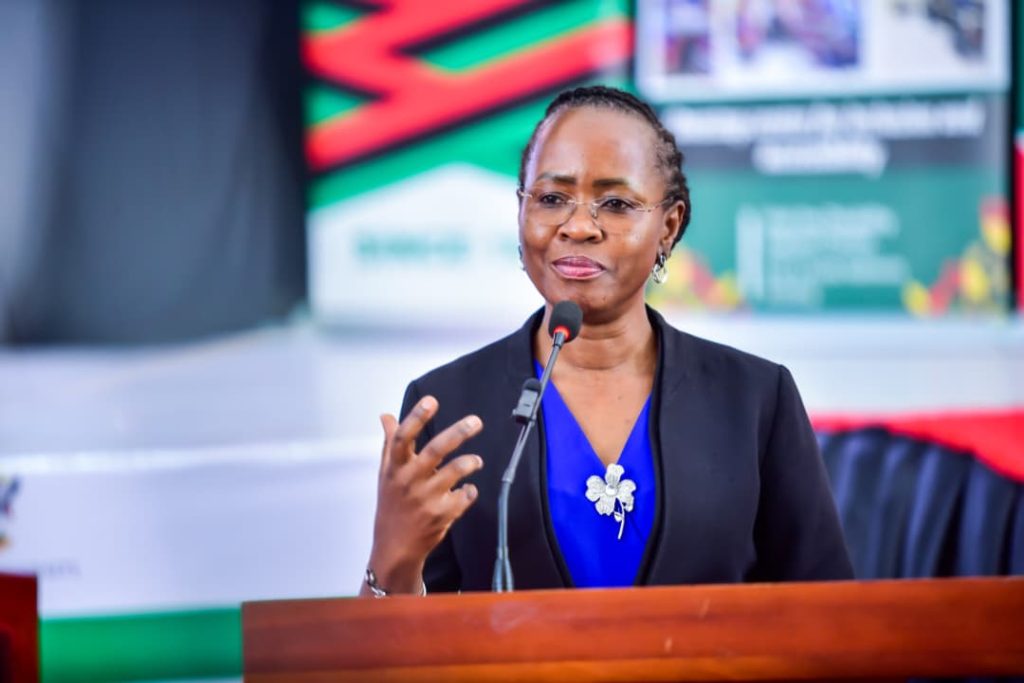
Welcoming the guests, Prof. Sarah Ssali, the Acting Vice Chancellor, celebrated Makerere University’s commitment to recognizing the resilience, contributions, and potential of persons with disabilities. She emphasized that building truly inclusive societies requires a dual approach: empowering marginalized individuals to realize their potential and creating institutions that are receptive and accommodating of diverse needs. Prof. Ssali underscored that disability inclusion is not an act of charity but a matter of human rights, social justice, and a collective responsibility shared by the entire university community.
Prof. Ssali highlighted Makerere University’s strong commitment to inclusivity, noting the Disability Support Centre’s support, campus accessibility improvements, flexible teaching approaches, and digital inclusion efforts. She also recognized investments in sign language interpretation and staff training to better support students with disabilities.
Prof. Ssali called upon stakeholders to make inclusion a lived reality—one that celebrates diversity and recognizes disability as an integral part of the human experience. She explained that genuine inclusion is built on partnership, shared responsibility, and intentional accommodations, noting that these principles underpin the university’s safeguarding policy inspired by the Ubuntu philosophy. She observed that inclusion goes beyond creating comfort. “It requires those without disabilities to actively adjust, accommodate, and treat everyone as equal participants in the university community,” she said.
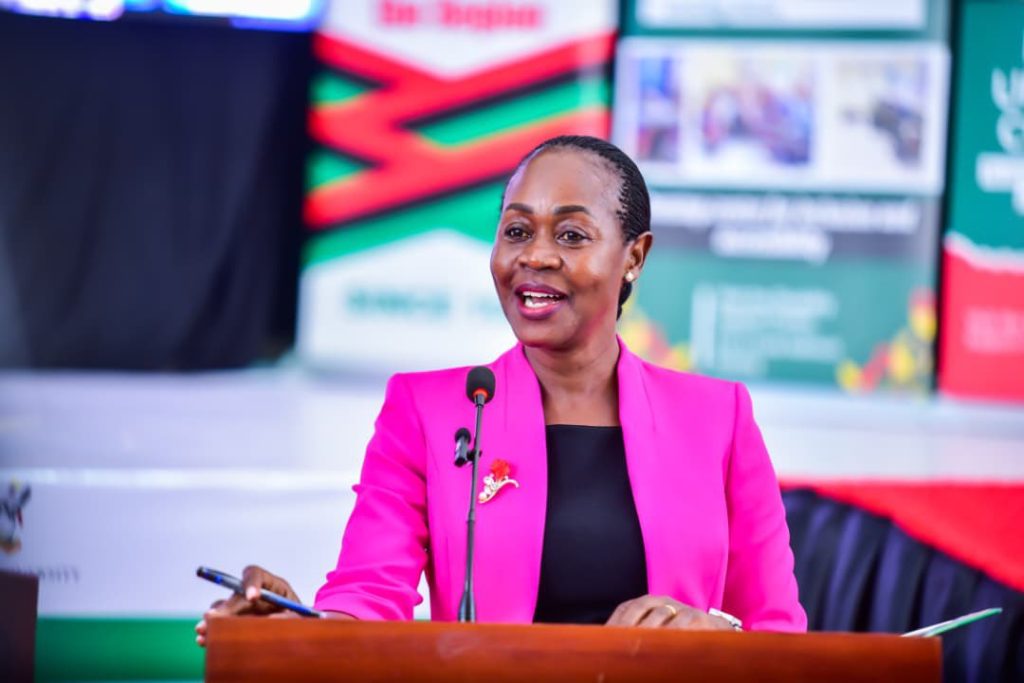
Dr. Winifred Namuwonge Kabumbuli, Dean of Students at Makerere University, reaffirmed the university’s long-standing commitment to implementing inclusive policies and practices. She emphasized that Makerere values diversity and creativity, fosters mutual support, and provides an inclusive academic and social environment that enables all members to grow, thrive, and contribute as changemakers.
The Dean of Students highlighted Makerere University’s provision of essential assistive devices such as wheelchairs, Braille materials, and white canes to support full integration of students into academic and social life. She noted the university’s commitment to equitable academic participation through measures such as extra exam time, access to readers, and provision of carers who receive accommodation, feeding, and remuneration.
“Let us unite in promoting disability awareness, understanding, and inclusion. Together, we can build a more inclusive and supportive community. One of Makerere University’s core aims is to ensure that everyone at this esteemed institution has the opportunity to participate in every aspect of life to the best of their abilities and dreams as we build for the future,” she said.
Minister appeals for true inclusion through shared spaces and equal access
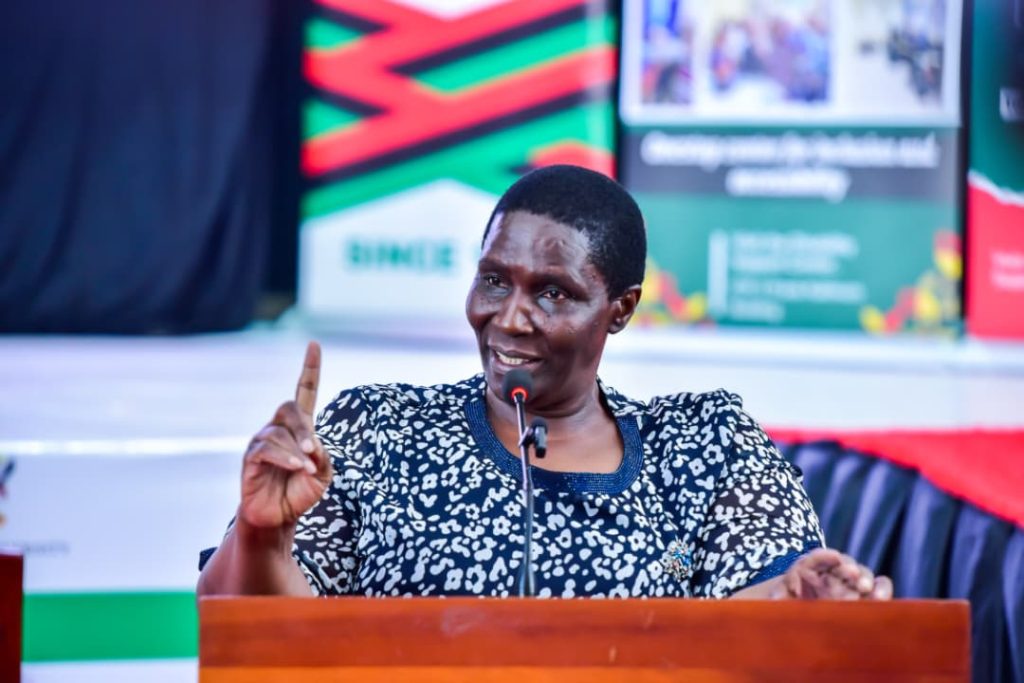
The Guest of Honour, Hon. Hellen Grace Asamo, Minister of State for Disability Affairs, stated that disability is shaped more by societal attitudes than by personal limitations. She called for true inclusion through shared spaces, equal access, and collective participation. She urged parents to take equal responsibility for their children with disabilities and reminded the public that anyone can experience disability, making proactive inclusion a collective responsibility.
“Disability is an idea shaped by society, and the attitudes often start at home. When a child is born with a disability, many see it as a burden. And while women often bear the brunt, fathers must also support their children. Remember: anyone can become disabled at any point—through accident, illness, or age. So planning for inclusion is not optional; it is necessary,” Hon. Asamo said.
She added that breaking barriers is essential, as persons with disabilities continue to excel across various fields. According to her, inclusive progress depends on creating opportunities rather than imposing limitations, and on recognizing that persons with disabilities are not homogeneous, but a diverse group with unique abilities, needs, and potential.
Hon. Asamo urged academic leaders to leverage their influence beyond the Makerere University main campus, to promote inclusive communities, calling for accessible education pathways, employability-focused training, and stronger advocacy against stigma. She emphasized that leadership is defined by capability, not physical condition, and noted the importance of mentorship, counselling, and job preparation for graduates with disabilities.
The Minister highlighted the everyday challenges faced by persons with disabilities, stressing that both public and private sectors must take action. She praised emerging inclusion in beauty, fashion, and entertainment, noting pageants and showcases as affirmations that talent and dignity transcend disability. She encouraged persons with disabilities to always claim their space and be visible.
“To people living with disabilities: nobody will hand over to you, your space—you must claim it. Be visible and be heard. Inclusion is a right, not a debate. Persons with disabilities contribute to society and the economy just like anyone else,” she said.
Keynote Speaker advocates for an enabling environment for disability-inclusion

Delivering the keynote address, Hon. Safia Nalule Juuko, Chairperson of the Equal Opportunities Commission and former National Woman MP representing Persons with Disabilities in the 10th Parliament, affirmed that disability is not a single condition, but a diverse experience shaped by the interaction between health conditions and environmental barriers.
Hon. Safia Nalule was emphatic that families, teachers, and communities must create enabling environments, and praised the role of supportive parents and educators in her own life while calling attention to the many children who lack similar support.
“Families must accept their children, support them, understand their needs, and avoid treating disability as a curse or omen. Children with disabilities are entitled to healthcare, nutrition, education, and decision-making space. Sadly, many do not receive these rights,” Hon. Safia Nalule said.
She recommended that disability inclusion requires practical, measurable action: education and awareness led by persons with disabilities, meaningful consultation, and active participation in planning, budgeting, and implementation. She stressed that institutions must budget for both physical and financial access since the cost of exclusion far outweighs that of inclusion.
Inclusivity must span humanities and science disciplines
Prof. Frank Mwiine, Acting Deputy Vice-Chancellor (Finance & Administration) and Principal of the College of Veterinary Medicine, Animal Resources & Bio-Security, asserted that in addition to the humanities and social sciences, inclusivity must span all disciplines, including STEM (Science, Technology, Engineering, and Mathematics). He articulated that inclusion is a continuous responsibility, not a one-off event or favour. “It is a responsibility that Makerere University must consistently and intentionally uphold, and we are committed to doing exactly that,” he affirmed.
Mak Council lauded for promoting disability-inclusion
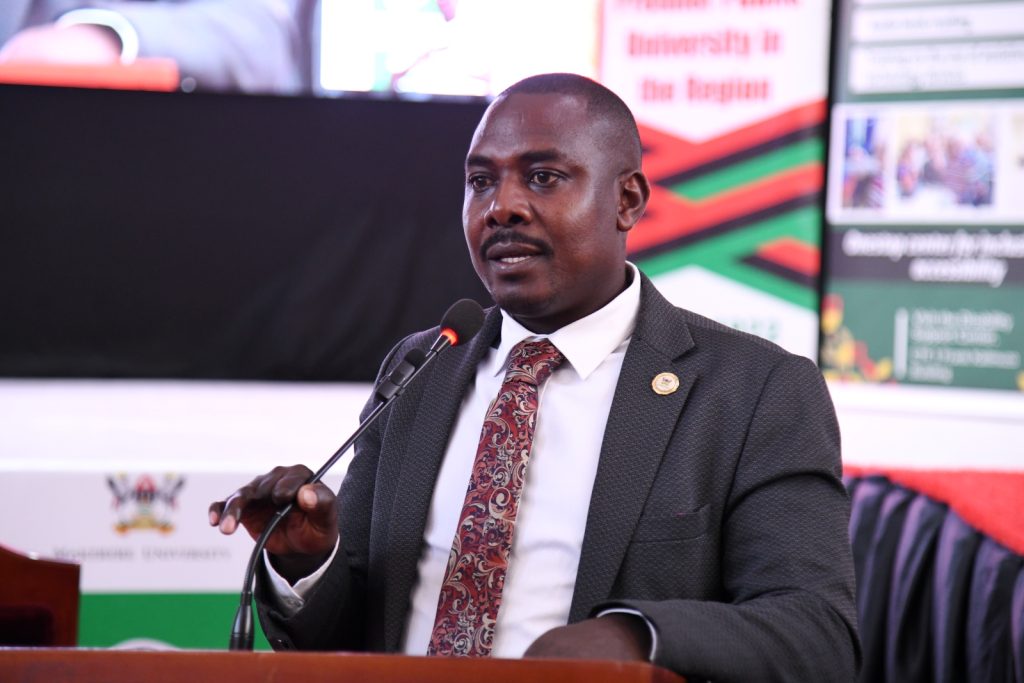
Mr. Amon Muteganda, representative of administrative staff with disabilities on the Makerere University Council, reaffirmed that the university is indeed an inclusive institution. He noted that disability-related concerns consistently receive respect and thoughtful consideration during council deliberations, with members listening attentively and responding constructively. He praised management for its timely action on the issues raised, highlighting the new transport initiative as a key example.
“Many people have spoken about inclusivity at the management level, and we have seen it in action. I want to sincerely thank the university management for their responsiveness. Whenever we raise concerns about disability-related issues, they are addressed promptly. One notable example is our transport initiative,” Mr. Muteganda said.
Student leader asserts disability is not inability
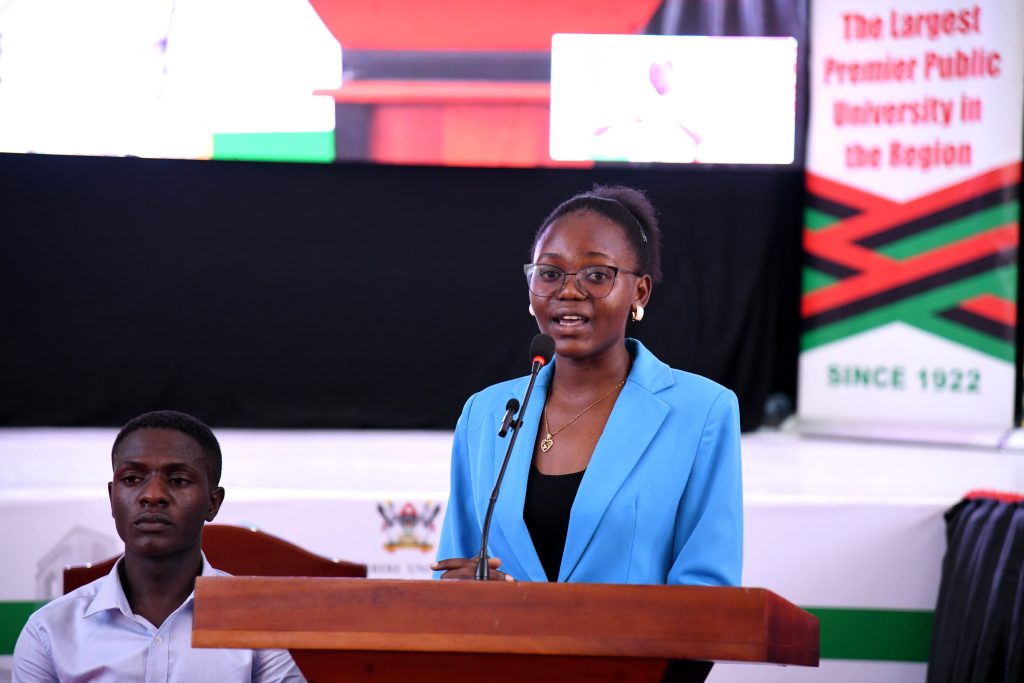
The Guild Minister for Persons with Disabilities, Hon. Donita Akankunda reflected on her experiences as a student with low vision and representative of visually impaired learners. She acknowledged improvements in accessible infrastructure, such as buildings and transport. She applauded the determination of fellow students with disabilities to create awareness, challenge stereotypes, and demonstrate that disability is not inability.
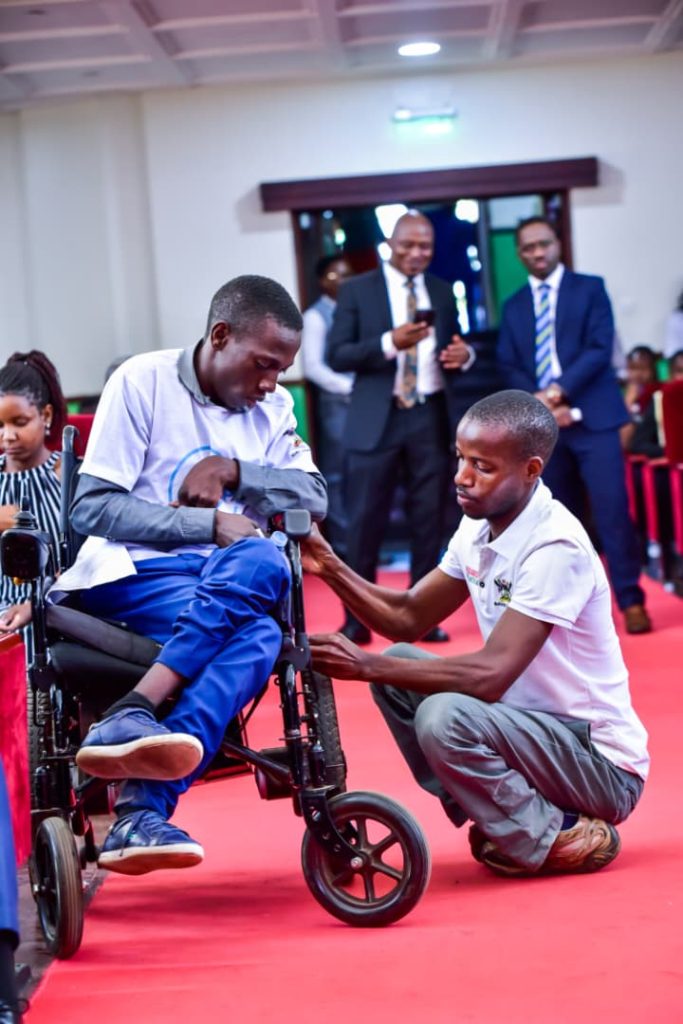
“My fellow students and persons with disabilities, I thank you for your resilience and dedication to raising awareness. Despite the many challenges we face, you have stepped forward, embraced leadership roles, and engaged in meaningful activities, demonstrating that disability is not inability. Together, we will continue to prove this every day,” she said.
Student with Disability shares his experience on adaptation
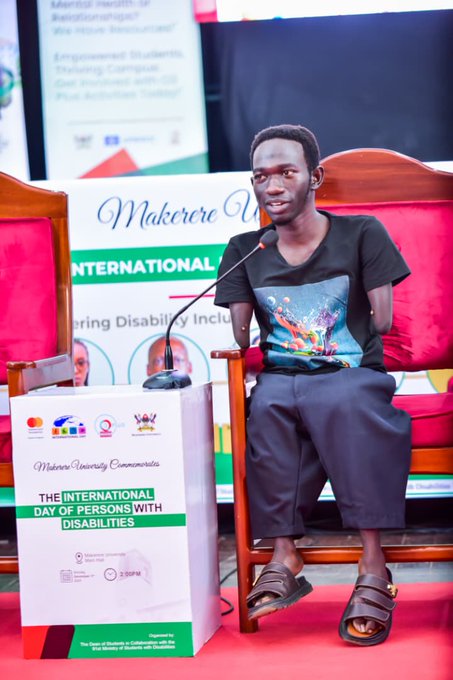
Sharing his personal journey as a student with a disability, Mr. Safiri Mungofeni, a first-year Bachelor of Architecture student at Makerere University, reflected on his initial concerns about managing practical work, navigating equipment, and moving around campus. “Over time, with the support of accessible resources and encouragement from staff, I gradually adapted,” he said. He added that witnessing fellow students with disabilities confidently navigating campus life inspired him to believe in his own potential and persevere.
Drawing inspiration from global examples, such as Chris Downey, a visually impaired architect, Safiri declared that with proper support, encouragement, and mindset, students with disabilities can excel in fields where society least expects them.
Parents called upon to love and support children living with disabilities
Illuminating both the challenges and transformative possibilities of parenting children with disabilities in Uganda, Mr. and Mrs. Kizito Bbosa, parents of Hon. Catherine Nakibuuka, a second-year law student and Speaker of the Makerere University Students with Disabilities Association shared their journey that began when their daughter was born with visual impairment. In their quest for solutions, they initially invested all their resources in medical interventions, holding onto hope that she might one day regain her sight. When these options were exhausted, they redirected their focus entirely to education, embracing it as the next frontier of opportunity and empowerment for their daughter.
“When our daughter was born in 2003 with a visual impairment, I invested every resource I had, believing she might regain her sight, until I realized that even money has its limits. We then shifted our focus to her education. Truly, the most challenging experience I have ever faced has been trying to educate her,” Mr. Bbosa recounted.
Recognizing that Catherine and other visually impaired children deserved more than sympathy, the Bbosas transformed their personal struggle into a broader mission for change. This led to the founding of the Centre for Visually Impaired Children (CEVIC) and later CEVIC School for the Blind, institutions created not out of charity but from a belief in the potential of children with visual impairments, providing them with opportunities to learn, belong, and thrive.