By Ritah Namisango and Monica Meeme
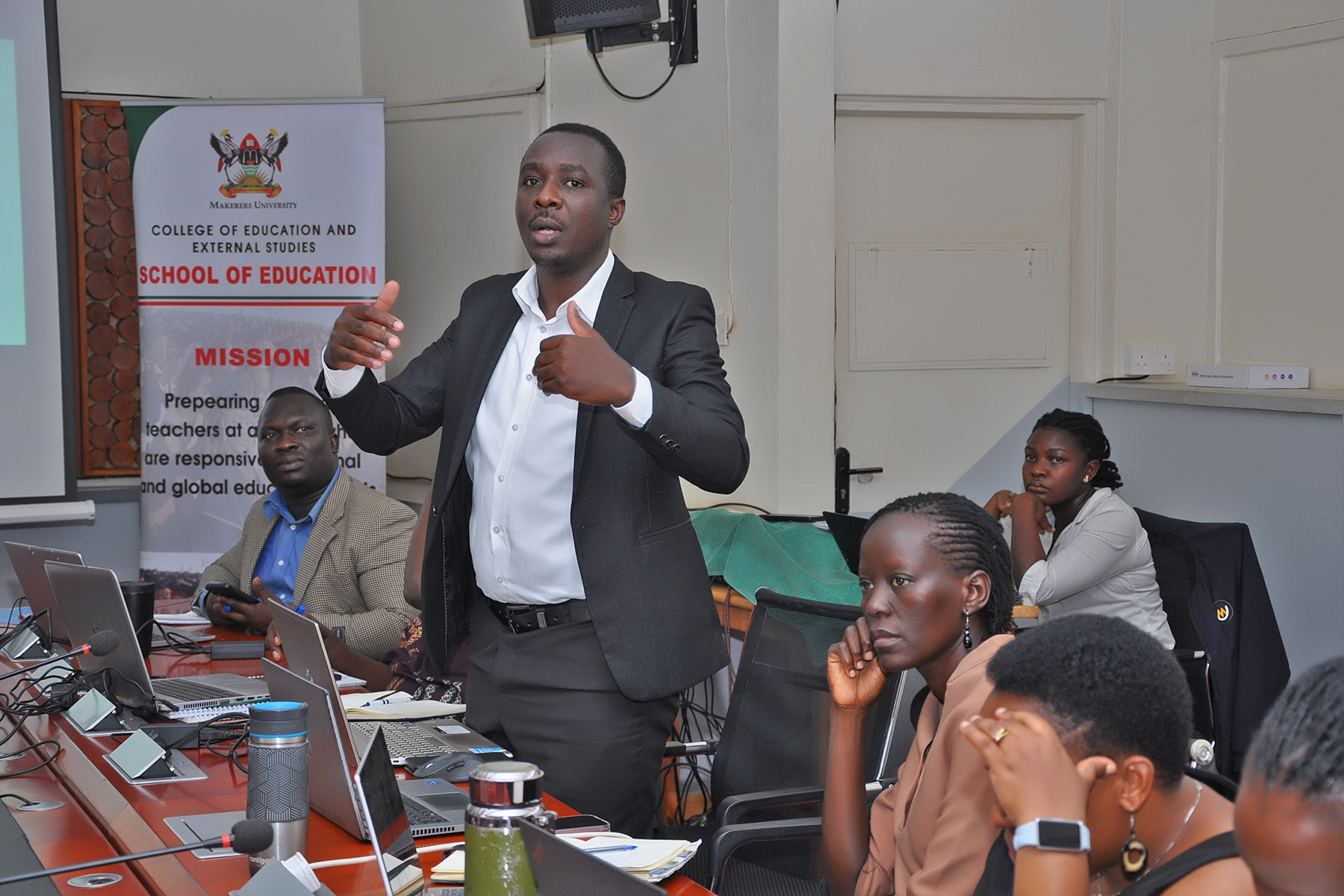
Sept 07, 2026: Delivering a presentation titled “Aligning Academic Courses with Competence-Based Education (CBE) and Training,” Associate Professor Timothy Tebenkana underscored the need for universities to equip graduates with practical skills to solve real-world problems.
“Higher education must move beyond content-heavy teaching to develop competent, adaptable, innovative and employable graduates,” he emphasized.
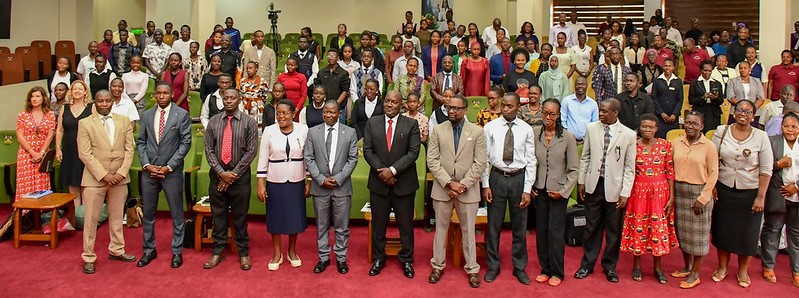
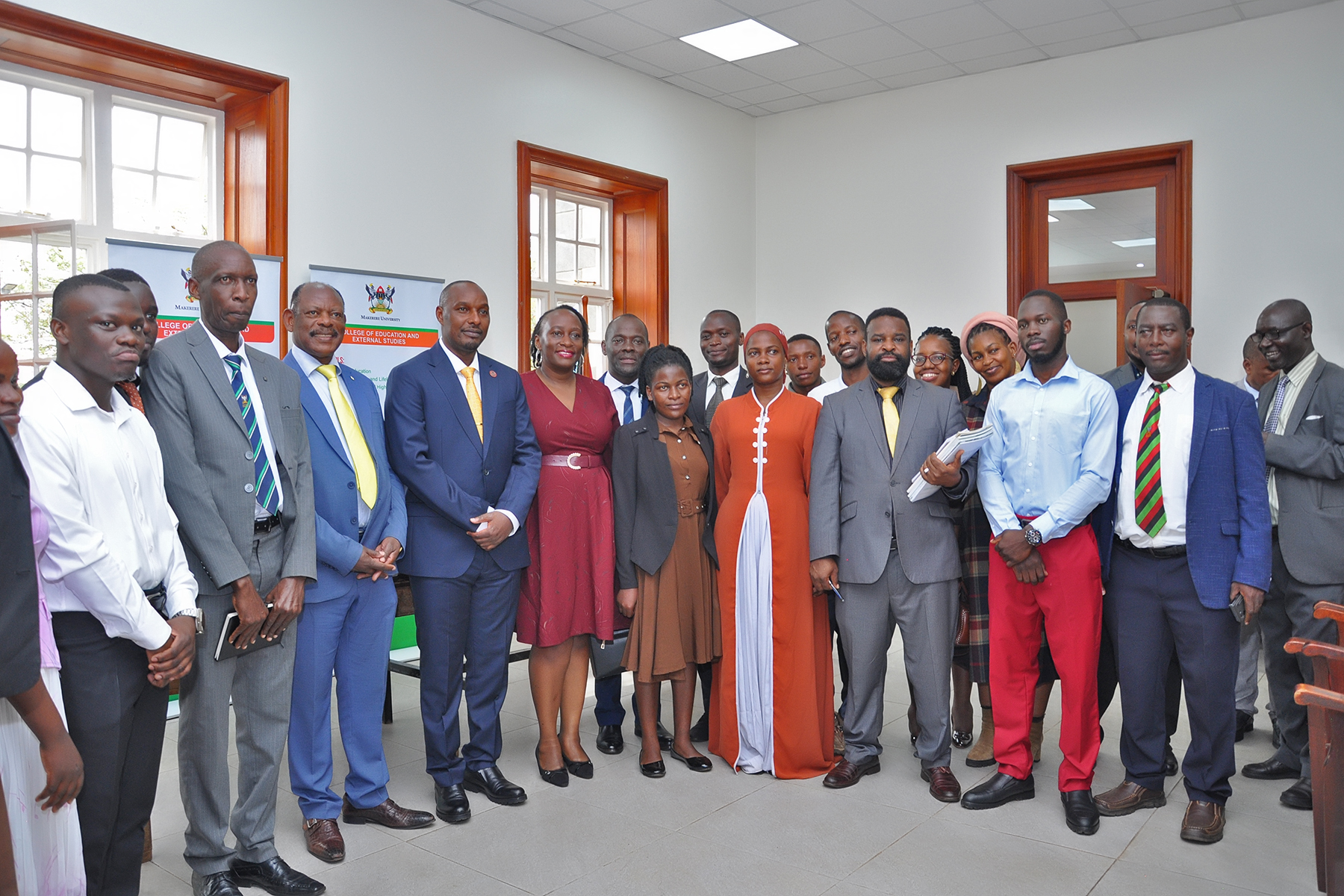
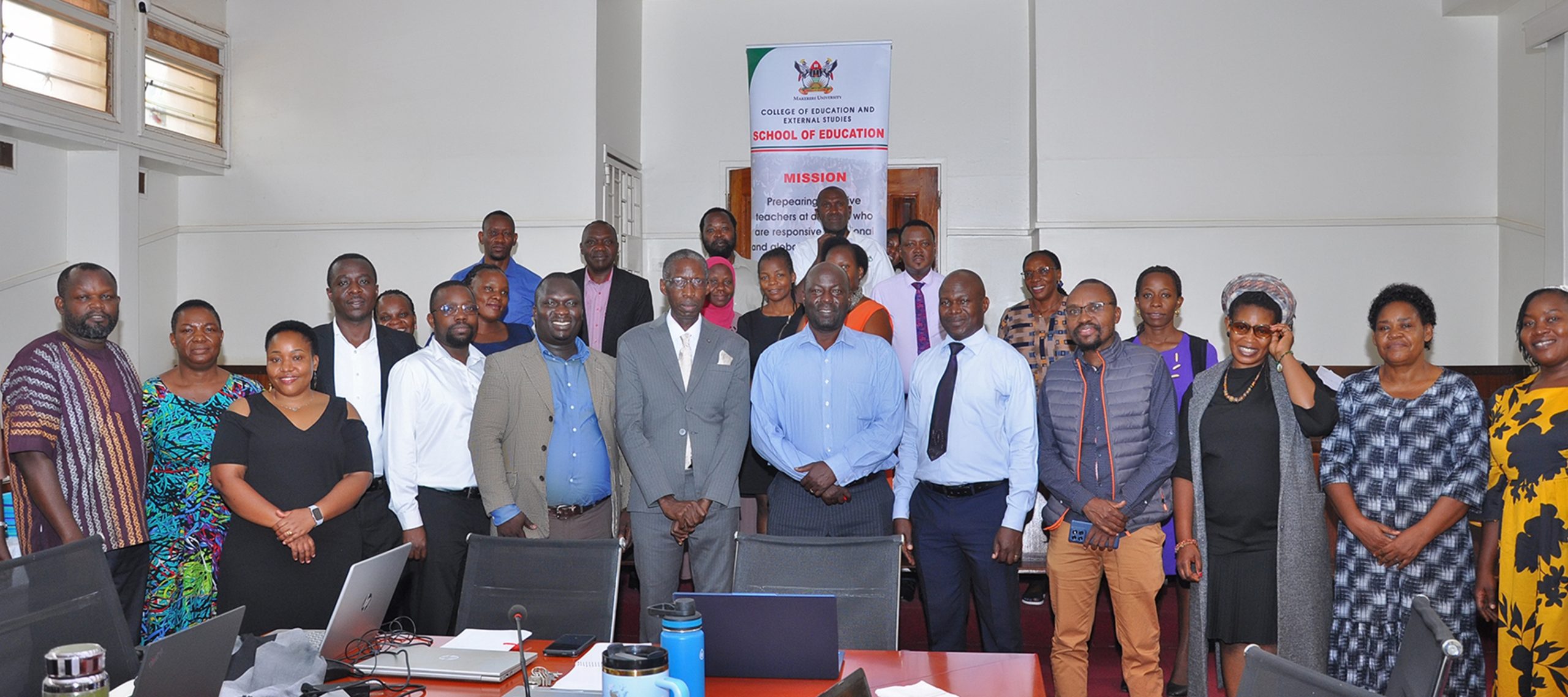
Held on 7th September 2026, the Competence-Based Education training brought together academic staff from the School of Distance and Lifelong Learning (SoDLL) at the College of Education and External Studies (CEES). The School consists of the Department of Open and Distance Learning (DoDL) and the Department of Adult and Community Education (DACE).
The participants listened to speeches and presentations from the following officials: Prof Anthony Muwagga Mugagga-Principal,College of Education and External Studies (CEES), Associate Professor Timothy Tebenkana-the facilitator of the training, Dr Joseph Watuleke- the Head, Department of Open and Distance Learning (DoDL) and Acting Dean, SoDLL, Prof. Paul Birevu Muyinda- the Director, Institute of Open, Distance and e-Learning and Dr Jimmy Tibs Tumwesigye from the Department of Adult and Continuing Education (DACE) among others.
Key Principles for Competency-Based Curriculum Reform
During his presentation, Associate Professor Timothy Tebenkana underscored the importance of the training, noting that it would equip academic staff with practical knowledge and skills to align university programmes with Competence-Based Education and Training (CBET), while promoting collaboration and knowledge sharing.

He pointed out that only academic programmes aligned with the Competence-Based Curriculum at Makerere University would be accredited to run in the next academic year. He highlighted the need for approaches that develop critical thinking, creativity, collaboration, decision-making, and the ability to apply knowledge to unfamiliar real-world situations.
“We need to move beyond simply transmitting content and focus on what the learner can actually do with the knowledge, skills and values acquired,” he said.
Backward Design and Constructive Alignment
Underscoring the need for a backward-design approach, Associate Professor Tebenkana explained that Competence-Based Education training should begin with identifying the competencies graduates are expected to demonstrate in the workplace.
“These competencies should then guide the development of learning outcomes, content, teaching strategies, learning activities and assessment methods,” he explained.
He emphasized the importance of constructive alignment, where learning outcomes, teaching approaches and assessment methods work together to progressively develop the intended competencies.
Acknowledging the role of learner-centred and inclusive pedagogy, Associate Professor Tebenkana said courses should therefore provide flexible teaching approaches and multiple opportunities for learners to demonstrate competence while maintaining the required programme outcomes.
Aligning Learning Activities with Outcomes
Associate Professor Tebenkana advised lecturers to interpret learning outcomes before designing classroom activities and cautioned against overcrowding lessons with numerous tasks that cannot be completed within the available teaching time.
“Every activity should have a purpose and a clear link to what the learner is expected to achieve,” Dr Tebenkana said.
He highlighted the importance of fair and inclusive assessment, noting that learners may demonstrate competencies differently even when they receive the same instruction.
He challenged lecturers to critically examine whether their existing assessment practices measure genuine competence rather than only academic performance.
Developing Higher-Order Competencies
He explained that while outcomes such as identifying, listing and stating may be appropriate at unit level, course-level outcomes should progressively develop abilities such as analysis, application, evaluation and design.
He noted that lecturers should engage learners in the discovery of information following instruction, give them opportunities to explain their understanding, and create space for them to apply what they have learned to solving problems.
Academic Excellence, Collaboration and Resilience

The Principal, College of Education and External Studies (CEES), Prof. Anthony Muwagga Mugagga, urged academic staff to continue mentoring younger staff in order to sustain the college’s academic achievements.
The Principal emphasized the importance of teamwork in research and publication, recognizing colleagues who have supported staff in securing research projects and advancing their academic careers. “Collaboration is key, support one another in scholarship and professional development,” he stated.
Sharing lessons from his leadership experience, Prof. Mugagga urged staff to remain persistent in pursuing career progression. He reaffirmed his commitment to supporting staff career development during his tenure.
He implored the staff to make greater use of the college’s modern teaching and learning facilities, including digital laboratories equipped for recording online lectures and producing educational content.
Call for Urgent Curriculum Review
The Dean, School of Distance and Lifelong Learning (SoDLL), Dr. Harriet Nabushawo, represented by Dr Joseph Watuleke, emphasized the urgency of reviewing academic programmes to align them with the Competency-Based Curriculum (CBC) requirements.

“The National Council for Higher Education (NCHE) directed that only reviewed and approved academic programmes would be accredited to run in the next academic year,” he stressed.
He called upon participants to actively engage in the training so that they could effectively contribute to the ongoing curriculum review exercise.
Prioritize Continuous Learning and Adoption of New Approaches
Prof. Paul Birevu Muyinda, the Director-Institute of Open, Distance and e-Learning at CEES described the training as an opportunity for participants to learn, unlearn and relearn.

“Educators must be willing to move away from outdated strategies and embrace innovative approaches suited to the changing education landscape,” he stressed.
Prof. Muyinda highlighted the importance of experiential learning, observing that much of the knowledge gained during the training extended beyond the presentation slides.
He urged academic staff to incorporate the concept of time management in the competence-based courses. “As you develop the competence-based courses, ensure that students and learners appreciate time as a key resource. Learners should value time management.”
Practical Skills in Competence-Based Education

Dr Jimmy Tibs Tumwesigye from the Department of Adult and Continuing Education (DACE) emphasized the need for greater focus on practical skills and adaptability in university education.
He noted that graduates should be equipped to “do something beyond simply knowing something.”
He explained that this may require targeted modifications to curricula and teaching practices to ensure that graduates acquire practical competencies that can be applied beyond the classroom.
Reflections on the Competence-Based Approach
Different participants reflected on the implications of competence-based education.
Dr Dianah Nampijah from the Department of Adult and Community Education (DACE), focused on adapting academic programmes to the changing education environment.

Prof. Paul Birevu Muyinda, Director-Institute of Open, Distance and e-Learning emphasized the need for lecturers to adopt different approaches to information delivery depending on the learners they serve. He encouraged academic staff to read widely, discover new approaches and disseminate knowledge in ways that enable the different learners to understand and keep pace with the new curriculum.
Dr Collins Kwarisima, a member of faculty at the college, acknowledged that students possess different competencies and learning priorities, highlighting the need for teaching approaches that recognize learner diversity.
Way Forward
The training highlighted the need for academic staff to translate competence-based education principles into actual curriculum, teaching and assessment practices.
The academic staff were encouraged to review their programmes with a focus on clearly defined competencies, constructive alignment, learner-centred teaching, inclusive assessment and the progression of learning outcomes from foundational knowledge to higher-order skills.