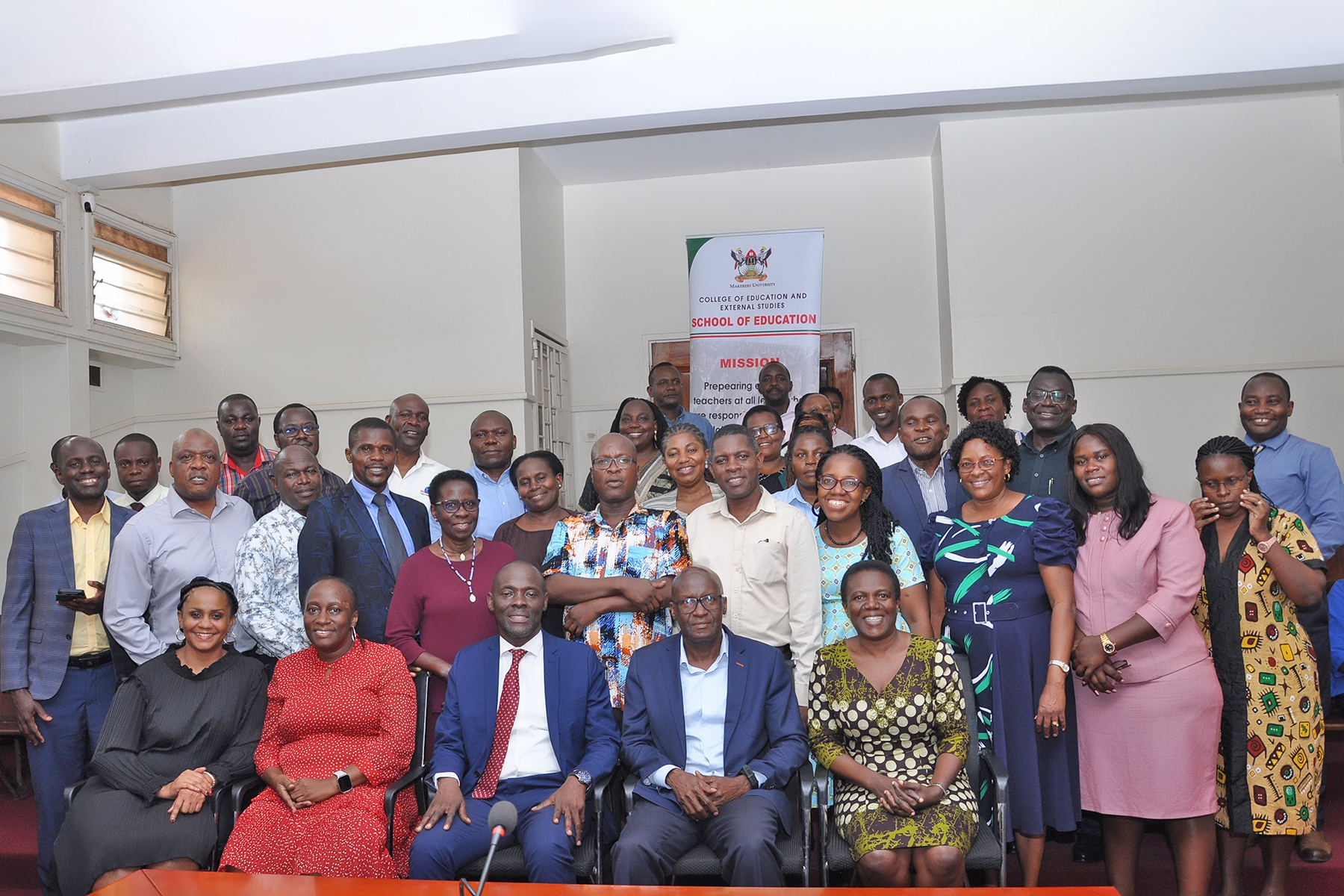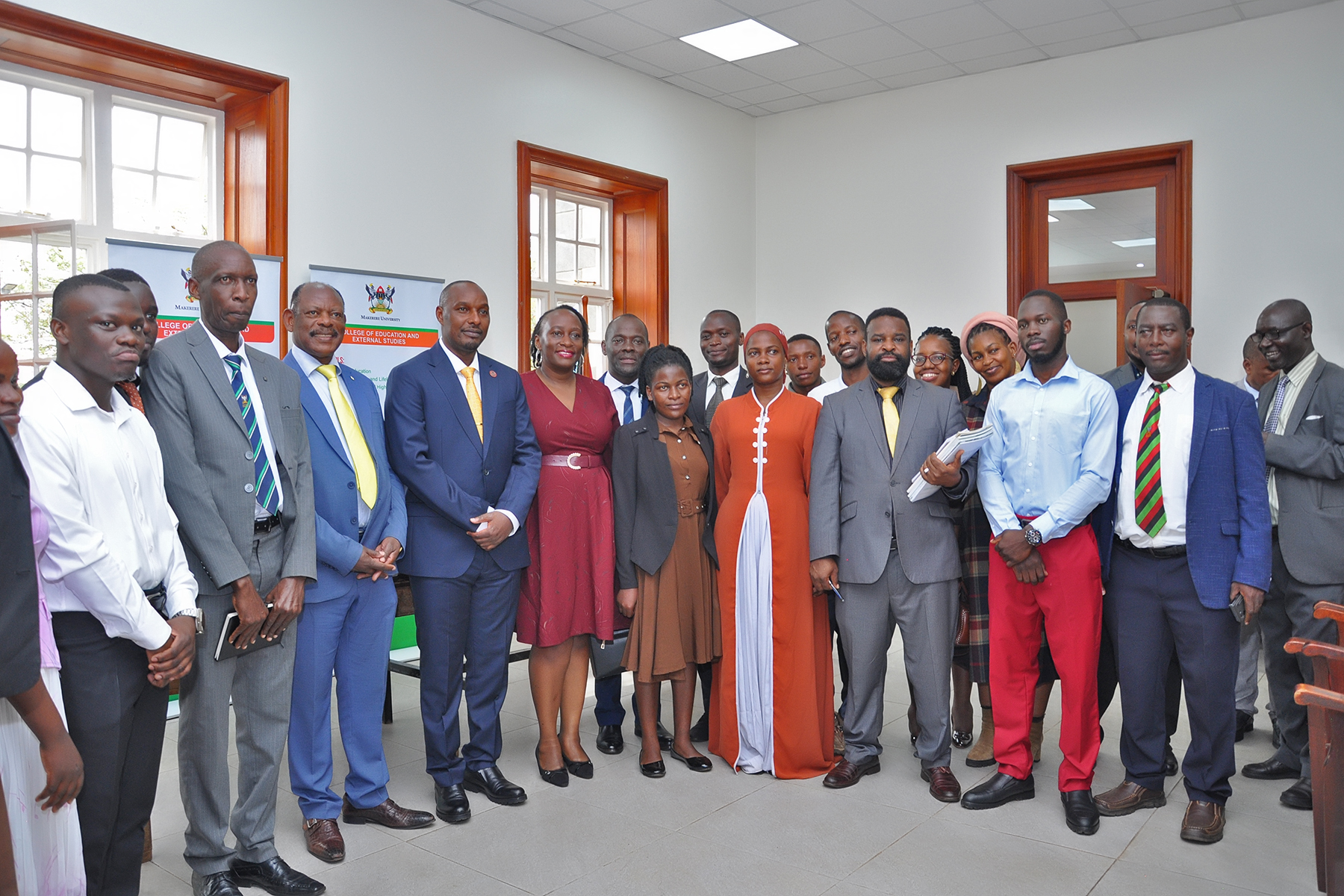
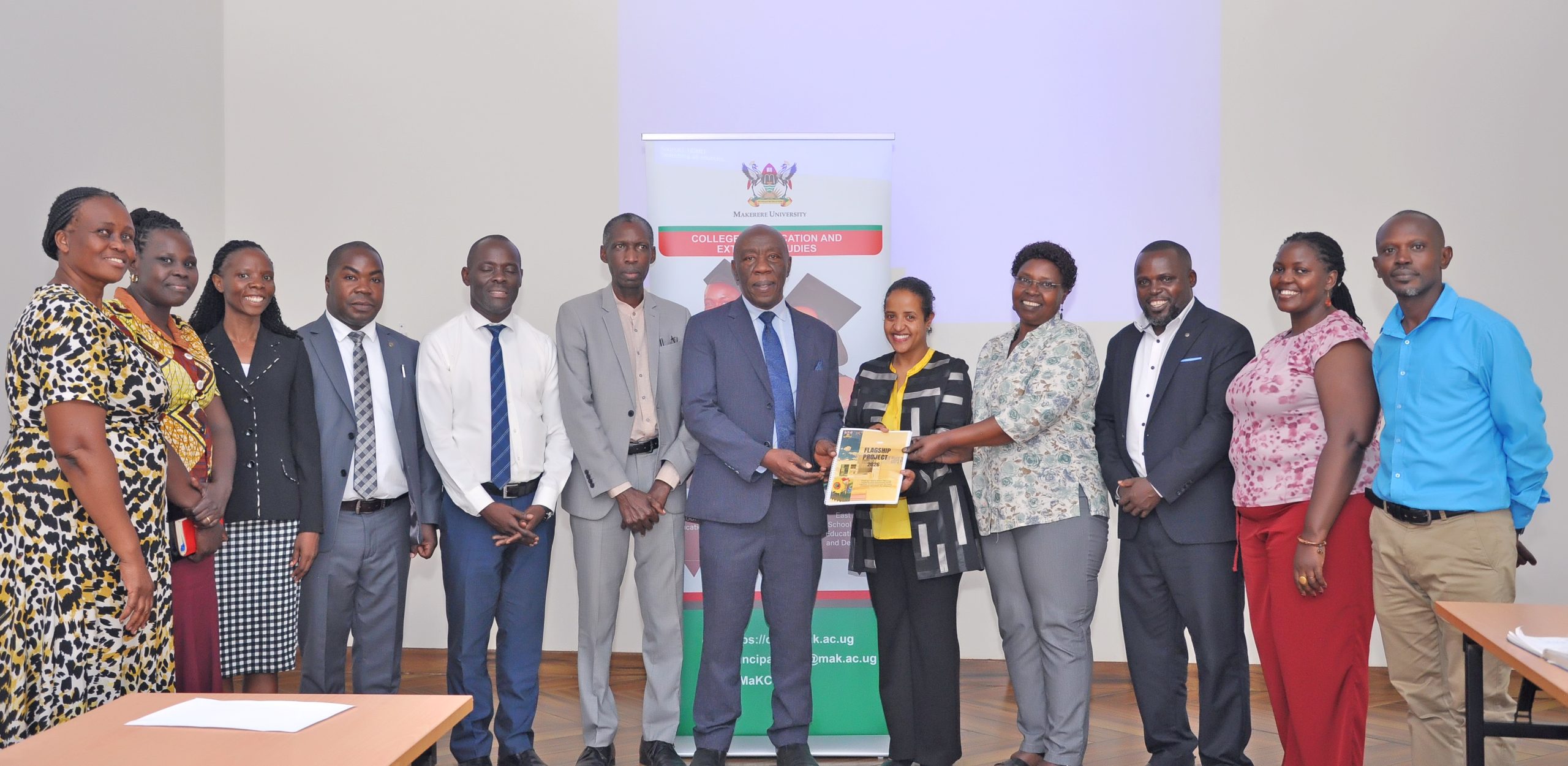
On 21st October 2026, the Deputy Vice Chancellor (Finance and Administration) at Makerere University, Prof. Henry Alinaitwe, received the architectural designs and refurbishment plans for a model Day Care Facility and Nursery School under the College of Education and External Studies (CEES).
The Country Director, Partnership for Change (Ethiopia), Ms. Birikit Terefe, handed over the documents to the Makerere University leadership on behalf of the Managing Director, Partnership for Change in Norway.
The handover of the documents marked the culmination of a series of stakeholder engagement meetings involving Makerere University leadership, the Gender Mainstreaming Directorate (GMD), the College of Education and External Studies (CEES), University engineers, the Estates and Works Department, the Ministry of Labour, Gender and Social Development in Uganda, and the Partnership for Change. Furthermore, the commencement meeting held on 21st October 2026 has given the green light for the re-modelling and refurbishment works, funded by Partnership for Change-Norway, which are scheduled to begin during the first week of November 2026.”
The College of Education and External Studies (CEES) at Makerere University has been hosting the Child Study Centre at the School of Education, which is going to be refurbished into a model Day Care Facility and Nursery. With the remodeling, the facility will host children (aged 0-3 years) and learners in the nursery section (pre-primary level of education). The facility will be managed by the College of Education and External Studies (CEES), through a collaborative effort involving the Makerere University Gender Mainstreaming Directorate (GMD), and key stakeholders including the Ministry of Gender, Labour and Social Development, and the Partnership for Change-Ethiopia. The facility will provide a child-friendly environment, support staff and students with childcare needs and responsibilities, and offer teacher trainees practical experience in early childhood care and education (ECCE).
Prioritising Childcare Facilities to support Students and Staff

In his address, the Deputy Vice Chancellor (Finance and Administration), Prof. Henry Alinaitwe, emphasized the importance of establishing and maintaining dedicated childcare facilities and spaces for breastfeeding (referred to as the mothers’ space) to support students and staff with young children.
“Such facilities are essential in creating a supportive university environment and should be properly maintained to serve their intended purpose,” he guided.
Prof. Alinaitwe commended Makerere University’s Gender Mainstreaming Directorate (GMD), Partnership for Change, the College of Education and External Studies (CEES), and the Ministry of Gender, Labour and Social Development for the initiative, describing it as an opportunity for the university to develop a model that other institutions could learn from and replicate.
Child-Friendly facilities to support Student-Parents and Teacher Education

The Principal, College of Education and External Studies (CEES), Prof. Anthony Muwagga Mugagga, highlighted the need for child-friendly facilities that support student-mothers or students who have parenting roles, and staff while strengthening practical training in early childhood care and education (ECCE).
“Establishing a model Day Care Facility would provide a learning environment where teacher trainees can observe and study children from infancy, understand their development, and strengthen their practical teaching skills,” he noted.
The Principal confirmed the College’s commitment to ensuring that the facility is properly maintained and serves its intended purpose. He was accompanied by Associate Professor Mathias Mulumba Bwanika, Dean of the School of Education, and Dr. David Kabugo, a faculty member who heads Early Childhood Care, Education, and Research at CEES.”
Provision of Childhood Care Needs and Day Care Facilities
Dr Euzobia Mugisha Baine, the Chief Gender Officer at the Gender Mainstreaming Directorate (GMD), highlighted the University’s commitment to creating an enabling environment where students and staff can balance their academic and professional responsibilities with childcare needs.
In the execution of its mandate, GMD is working closely with the Ministry of Gender, Labour and Social Development, and the Ministry of Education and Sports, to attract partners and stakeholders to support the integration of child centres and day care facilities at higher education institutions.
Citing the fruits of the collaboration between the Makerere University Gender Mainstreaming Directorate and the Ministry of Gender, Labour and Social Development-which brought on board the Partnership for Change and led to the model Day Care Facility and Nursery at the College of Education and External Studies-Dr. Mugisha Baine is optimistic that there will be room to expand the services offered by such facilities and engage more partners to support the establishment of model child study centres and day care facilities in educational institutions.”
She acknowledged the contribution of the project partners, including Partnership for Change, the College of Education and External Studies (CEES), and the Ministry of Gender, Labour and Social Development, in advancing the initiative and supporting efforts to strengthen childcare provision.

Childcare Education is an Economic Investment
Representing the Managing Director, Partnership for Change Norway, the Country Director from Ethiopia-Ms. Birikit Terefe, emphasized the role of quality childcare in promoting gender equality, child development, and economic growth.
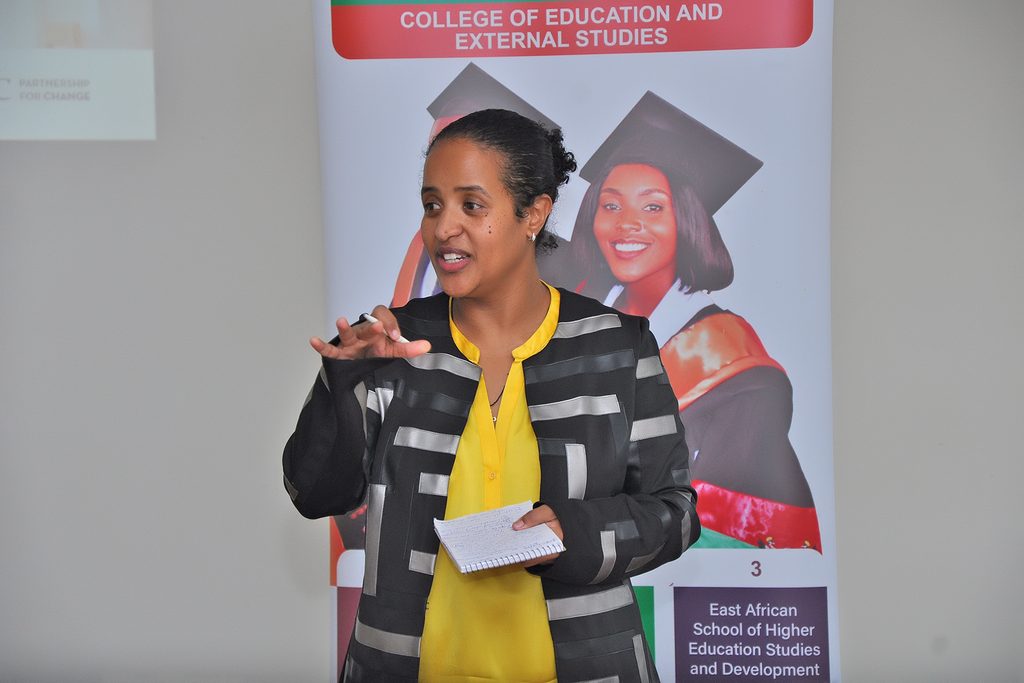
In the presentation, Ms. Birikit Terefe highlighted the Partnership for Change approach, which is hinged on Quality Assurance, Workforce Development, Model Centres, and Value Chain Development. She explained that the four approaches entail the following:
- Quality Assurance: Involves working with governments to develop national frameworks and quality standards.
- Workforce development: Developing training programs and certification systems for childcare workers
- Model Centres: Establishing high-quality childcare centres that allow stakeholders to see the model in practice.
- Value chain development: They support local businesses to supply the sector, with furniture, learning materials, food, and among other items.
Drawing from her experience in Ethiopia, Ms. Terefe said the Makerere University Day Care Facility at the College of Education and External Studies (CEES) would serve as a model for quality childcare, demonstrating good practices that other institutions could adopt and replicate.
She called for collaboration among government agencies, educational institutions, and development partners to expand access to quality childcare.