Over 150 students explore community conservation, indigenous knowledge and sustainable livelihoods through experiential learning in Kamwenge District.
Makerere University has strengthened its commitment to competence-based education by taking environmental learning into the communities where conservation and sustainable livelihoods are part of everyday life. From 6 to 8 November 2026, more than 150 students from the Department of Adult and Community Education, School of Distance and Lifelong Learning, College of Education and External Studies (CEES), undertook a community-based environmental education field study in Bigodi, Kamwenge District.
The participants were third-year Bachelor of Adult and Community Education (BACE) and second-year Bachelor of Youth Development Work (BYDW) students studying ACE 3114: Theory and Practice in Environmental Education and YWX 2107: Environmental Management for Sustainable Development respectively. Their task was to observe, question, reflect and connect classroom concepts with the ways communities manage natural and cultural resources.
Bigodi becomes a living classroom
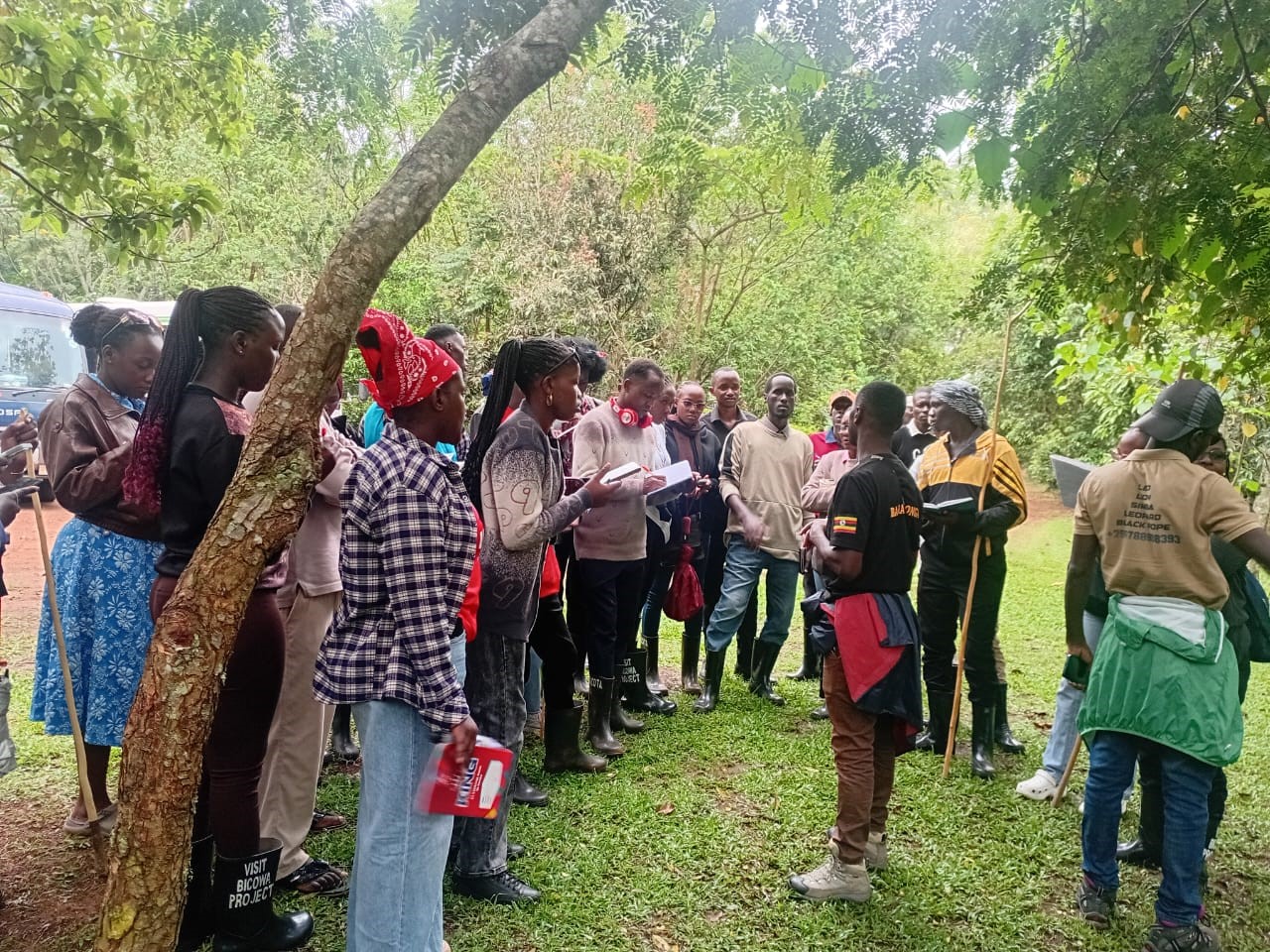
Located near Kibale National Park, Bigodi offered students an opportunity to examine community-based natural resource management. A guided nature walks facilitated by Bigodi Community Women Association (BICOWA) in partnership with Turaco Trail introduced learners to the relationship between biodiversity, conservation, tourism and local livelihoods.
Students learned directly from community guides, whose practical knowledge helped them examine both the benefits and challenges of living alongside wildlife. Discussions continued after the visit. In one Environmental student WhatsApp group, a participant recalled a specific lesson: “We are not supposed to feed wild animals, that’s one of the things I learnt yesterday.” The exchange illustrated how practical encounters can translate environmental principles into memorable decisions.
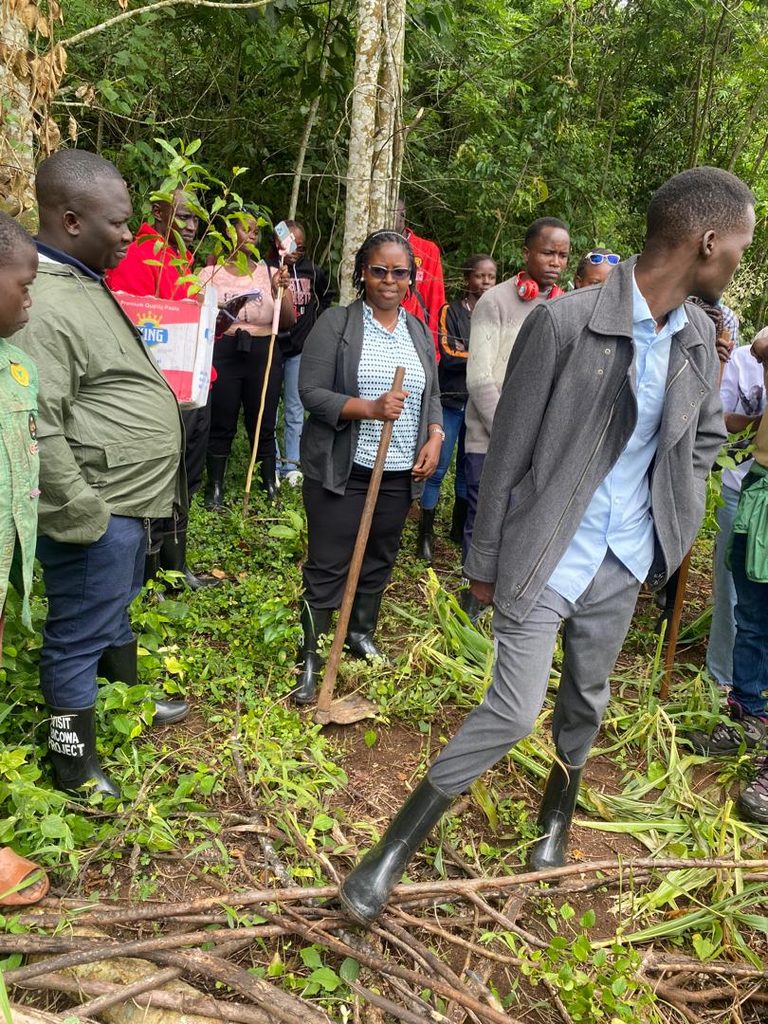
The learning experience was also accompanied by action. Students and lecturers participated in planting indigenous trees as a contribution to local conservation efforts, reinforcing the principle that environmental education should encourage responsible behaviour, not simply awareness. The exercise offered a tangible way to connect the protection of native species with the responsibility of present generations to safeguard resources for the future.
Learning from women entrepreneurs and local producers
A second major activity took students into the community to learn how households and groups combine conservation with income generation. Women involved in weaving and handicrafts demonstrated how locally sourced materials are turned into products for sale. Students also explored traditional dance and cultural performances as livelihood opportunities linked to the preservation of local heritage.
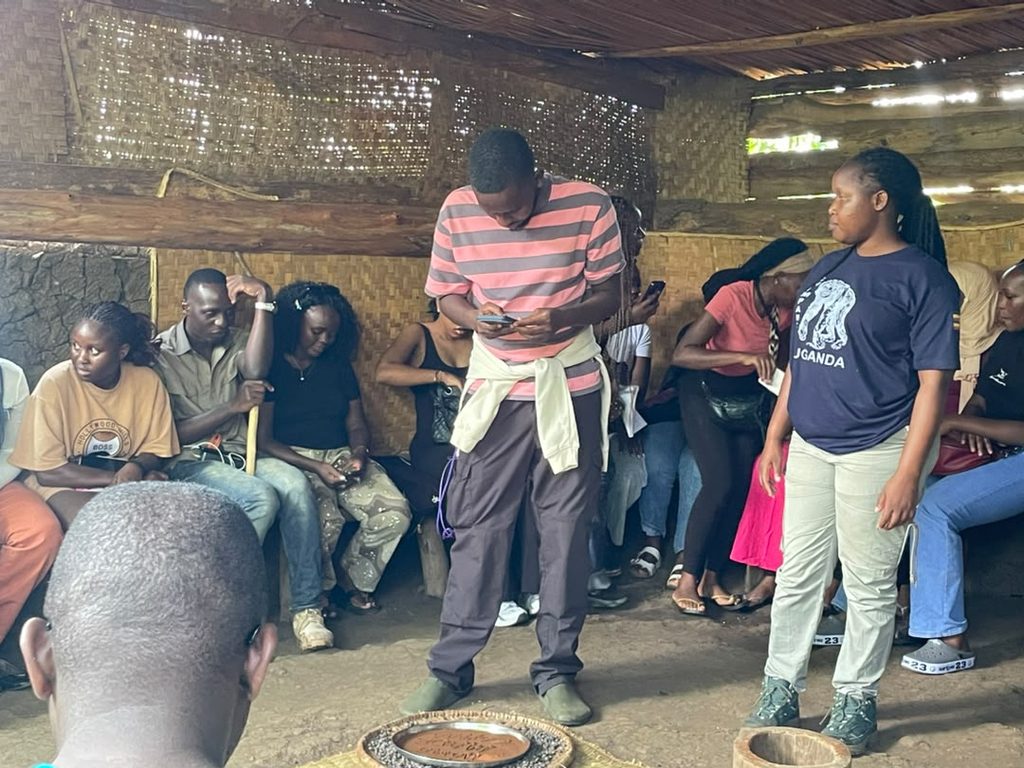
Interactions with coffee growers and processors traced the local value chain from cultivation to roasting, grinding and packaging. Women demonstrated small-scale processing using traditional techniques and simple tools, illustrating how local skills and value addition can support household enterprise.
Students also met producers of traditional banana beverages, who explained the stages of making banana juice, fermented beer and locally distilled spirits. These encounters encouraged discussion of intergenerational learning, entrepreneurship, safe production practices and the potential role of community education in improving product quality and market opportunities.
An interaction with a traditional herbal medicine practitioner introduced students to indigenous knowledge of trees, shrubs and plants used in local health traditions. The encounter highlighted the cultural importance of preserving native plant species while also encouraging critical consideration of the safety and effectiveness of traditional treatments.
Students reflect on learning and togetherness
Students’ messages following the field study showed that they valued both the academic experience and the relationships built along the way. Amarl Golooba, a third year BACE student, described the visit as “a wonderful and memorable experience” during which students “explored, learned and appreciated the importance of environmental conservation and protecting our natural resources.” Golooba summed up the lesson in a short observation: “Indeed learning goes beyond the classroom.”
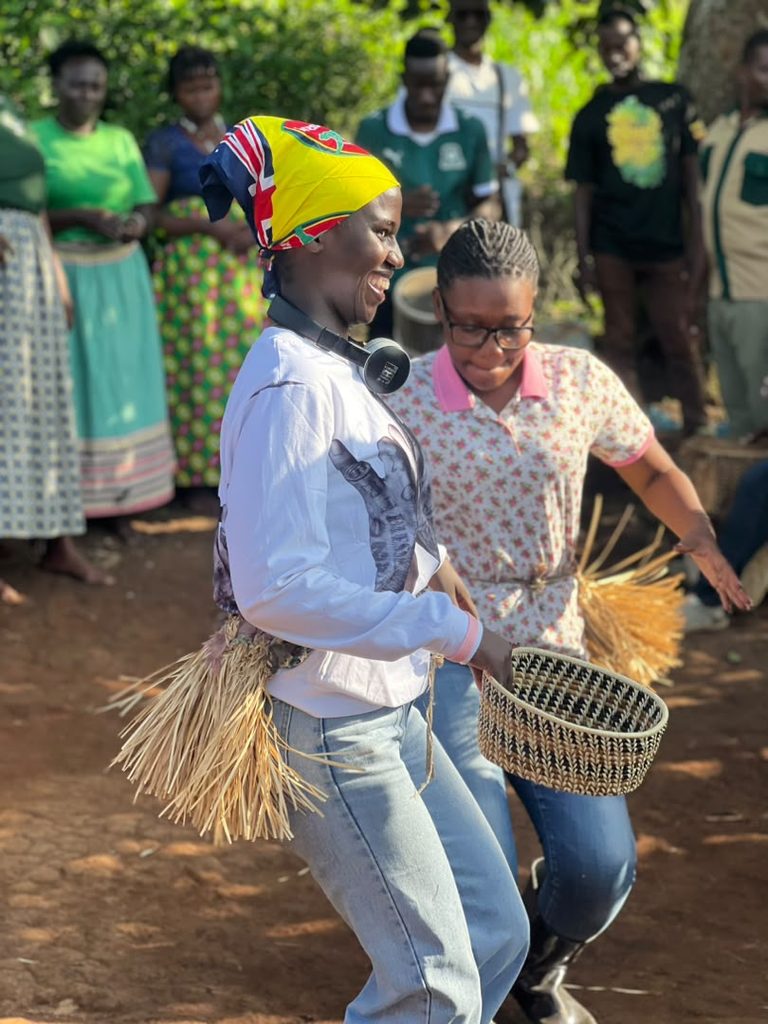
Maria Mirembe, a third year BACE class coordinator, described the trip as an experience of “participatory and solidarity” learning, while Luzinda Samuel, another class coordinator, thanked the lecturers for their guidance throughout the journey. Other students praised the knowledgeable local guides and reflected on how the community visits connected nature, culture and economic activity.
The students’ conversations also showed that learning did not end when they left Bigodi. They continued asking questions about environmental concepts, sharing observations and discussing the significance of their experiences. This continued dialogue is itself an important feature of reflective and lifelong learning.
Competence-based learning rooted in community experience
For Adult and Community Education, the field study demonstrated that meaningful learning begins with people’s lived realities. Community members were not simply subjects of observation; they were resource persons and educators whose practical knowledge complemented university teaching. Students learned through dialogue, participation, critical observation and reflection—principles central to adult learning and community empowerment.
For Youth Development Work, the experience offered insights into how young people can become facilitators of environmental action, cultural preservation, skills development and local entrepreneurship. It challenged students to think about how they might mobilise young people, support community initiatives and help create livelihood opportunities without degrading the environment.
The programme concluded with study-group reflections, allowing students to connect the experiences with course concepts, consider challenges facing community-based conservation and propose practical responses. In this way, the visit supported competence-based education through the application of knowledge, skills, values and attitudes to real-world situations.
Academic leadership and institutional support
The activity was supported and facilitated by Dr. Kellen Aganyira, the Environmental Education course convenor; Dr. Joseph Watuleke, Head of the Department of Adult and Community Education; Dr. Lwanga Byekwaso Jordan, field coordinator; and Dr. Namitala Josephine, the Situation Analysis Facilitator. The academic team guided students through the field engagements and encouraged them to turn observations into critical questions and learning reflections.
The Department expressed appreciation to Makerere University Management and the College leadership, led by CEES Principal Professor Anthony Muwagga Mugagga, for the financial and institutional support that made the activity possible. Professor Mugagga has consistently challenged academic units to lead the implementation of Competence-Based Education and Training (CBET). His message to staff has been that CEES, as the home of expertise in pedagogy, andragogy and heutagogy, must set the pace in translating competence-based approaches into meaningful teaching and learning practice across the country.
The Department also thanked Turaco Trail, BICOWA, community guides, women entrepreneurs, farmers, producers and traditional knowledge holders for sharing their expertise and making Bigodi a valuable learning environment.
Learning that contributes to transformation
The Bigodi experience showed that environmental conservation is inseparable from the economic and cultural lives of communities. It also demonstrated the value of university-community partnerships in which academic knowledge meets local experience. By observing conservation practices, learning from community enterprise and planting indigenous trees, students were able to move beyond discussing sustainability to participating in it.
As Makerere University advances competence-based education, such field experiences illustrate how future adult educators and youth development practitioners can be prepared not only to understand community challenges, but also to work alongside communities in addressing them.